Blog · Roofing Tips
Commercial Roofing 101 for NJ Property Managers
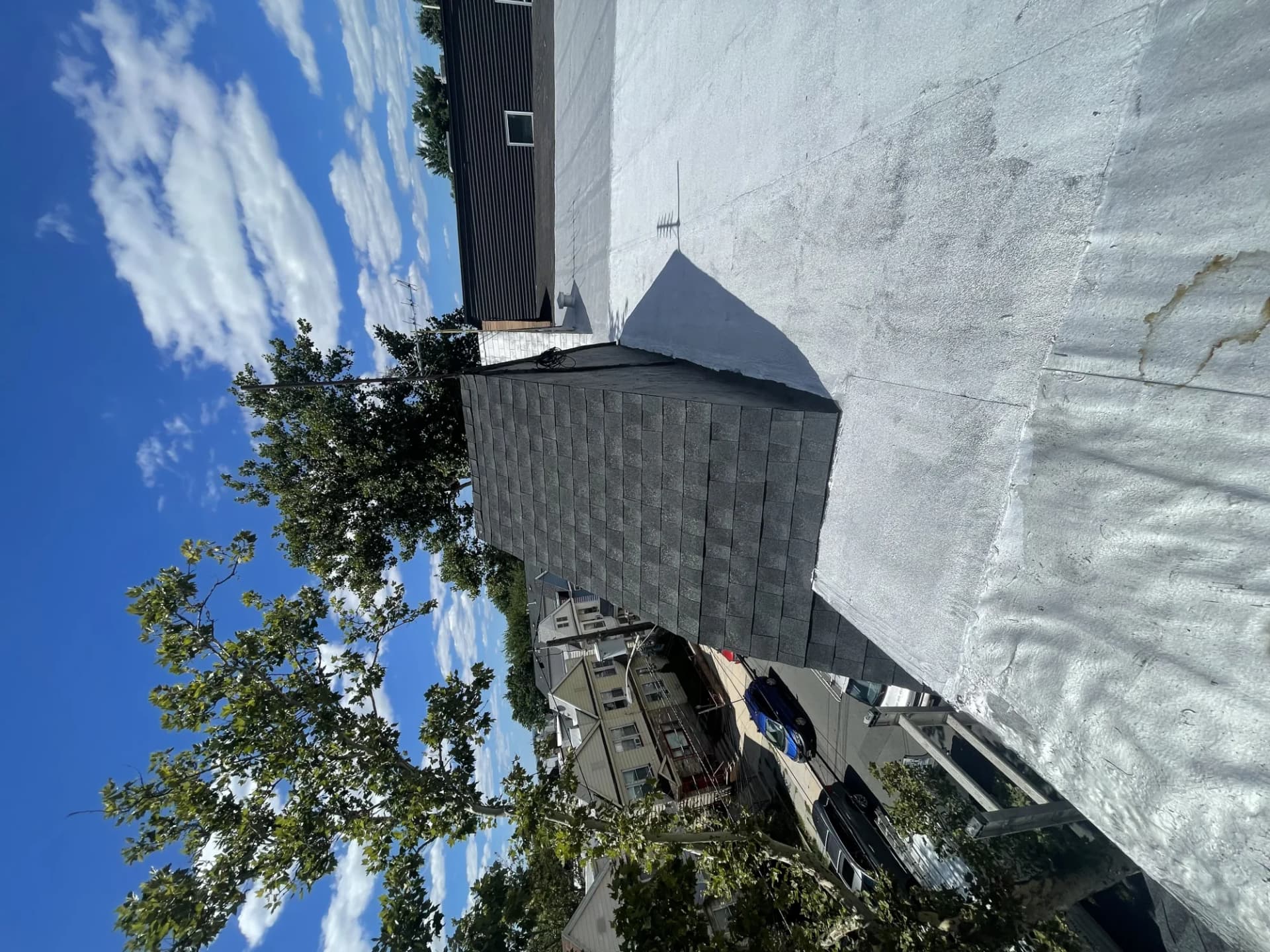
Commercial roofing in Bridgewater and across New Jersey involves a different set of decisions than a homeowner’s single roof replacement. A commercial low-slope roof is a managed asset with an inspection schedule, a warranty to maintain, and a capital budget behind it, not a one-time purchase.
This overview covers what property managers need to know across a roof’s life, from the systems in use to inspection cadence, tenant considerations, and how to keep the documentation that protects the property’s value.
Common Commercial Roofing Systems at a Glance
Three low-slope systems account for most New Jersey commercial roofs. TPO is a heat-welded, reflective single-ply membrane and the most widely installed system on new commercial roofs today. EPDM is a rubber membrane with a long track record, seamed with adhesive or specialty tape.
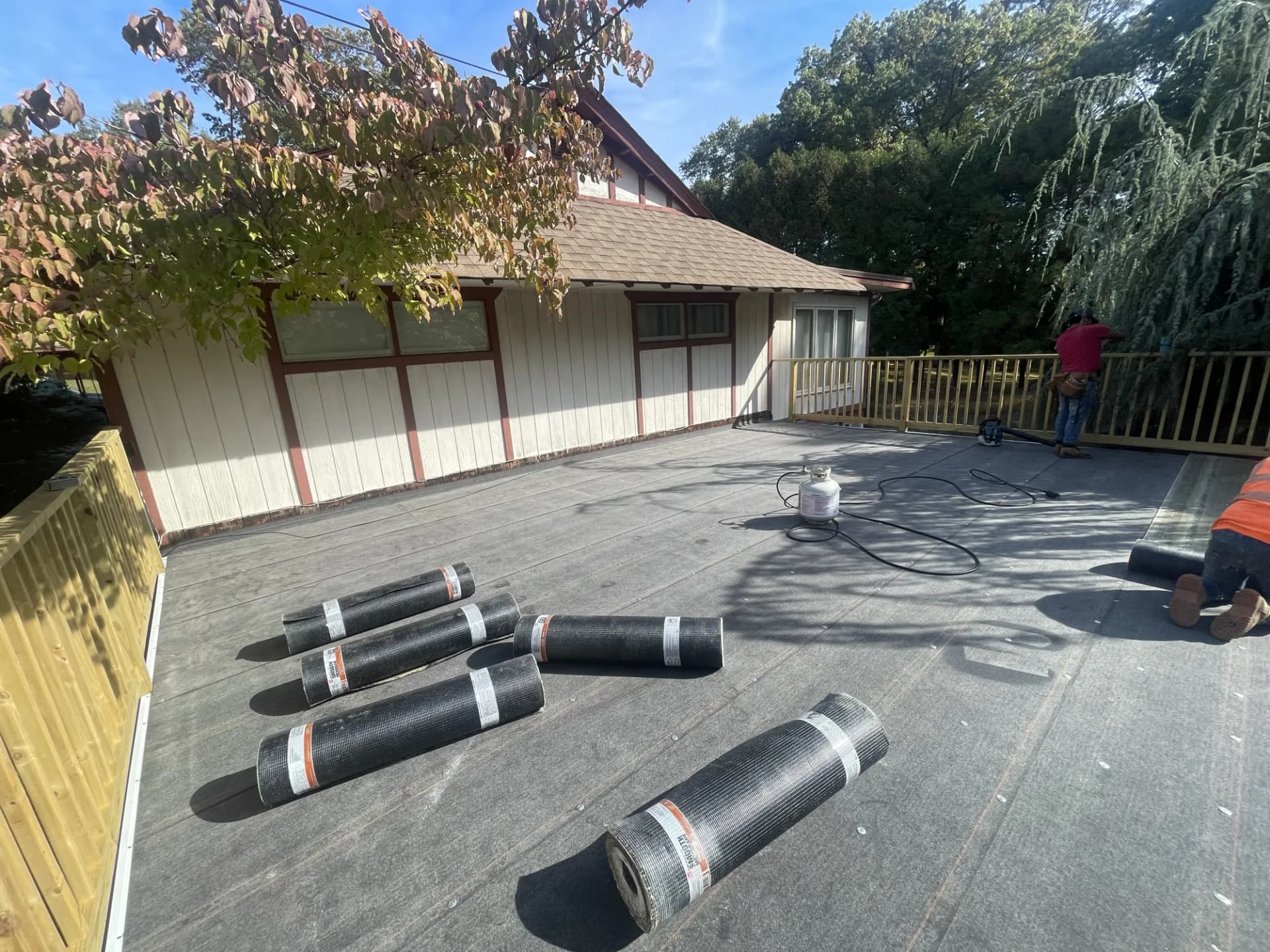
Modified bitumen is a multi-ply, torch-applied or self-adhered system common on older commercial buildings, often installed in overlapping layers for redundancy. Each system has its own inspection points and repair methods, which is why knowing what is on your roof matters before any maintenance decision.
Why Commercial Roofs Need Scheduled Inspections
A reactive, wait-for-a-leak approach costs more over the life of a commercial roof than a scheduled inspection program. Many manufacturer warranties actually require documented periodic maintenance to remain valid, which means skipping inspections can quietly void coverage you are already paying for.
A common professional practice is a commercial roof inspection twice a year, in spring and fall, plus an additional check after any major storm. That cadence catches small seam and flashing issues while they are still a repair rather than a full section replacement.
How Roof Condition Feeds Into Capital Planning
Unlike a homeowner’s single reactive repair, commercial roof management is a budgeting exercise across the roof’s remaining service life. Inspection findings and roof age should feed directly into a property’s capital expenditure planning rather than sitting in a file until something leaks.
A roof with several more years of useful life but a failing surface layer might only need a coating budgeted this cycle. A roof nearing the end of its service life with wet insulation belongs in next year’s capital plan for full replacement, not a stopgap repair.
Tenant and Business-Continuity Considerations
Commercial roof work has to work around the building staying open. That means scheduling around business hours, coordinating loading and staging areas so tenants and customers are not disrupted, and sequencing work section by section on a large roof rather than opening the whole surface at once.
Communication with tenants ahead of a project, including expected noise and any temporary access changes, prevents the kind of complaints that turn a routine roof repair into a property management headache.
Rooftop HVAC Units: A Common Leak Point
Rooftop HVAC units complicate flat-roof management in two ways. They add curb flashing and penetrations, which are common leak points that need their own inspection attention separate from the general membrane. They also restrict roof access and staging space during any repair or coating project.
Coordinating with your HVAC service provider before a roofing project, so curb flashing and unit pads are inspected and addressed together, avoids a scenario where a roof project is finished and a leak shows up at the HVAC curb a season later.
Comparing Common Commercial Roofing Systems
| System | Material Type | Typical Lifespan | Best For | Maintenance Note |
|---|---|---|---|---|
| TPO | Heat-welded single-ply membrane | Long, industry-standard range | New installations wanting reflectivity and welded seams | Seams should be checked for weld integrity each inspection |
| EPDM | Rubber single-ply membrane | Long, well-established track record | Roofs already on EPDM or seeking proven long-term performance | Adhesive and taped seams need periodic inspection for lifting |
| Modified Bitumen | Multi-ply torch-applied or self-adhered system | Moderate to long depending on layer count | Older commercial buildings and roofs needing layered redundancy | Watch for blistering and granule loss at seams and flashing |
Need a Roof You Can Trust?
Free written estimates and 24-hour emergency service across New Jersey since 2015.
Coating vs Replacement: A Quick Decision Framework
A structurally sound roof with a failing surface layer is usually a coating candidate, which extends service life at a lower cost than a full tear-off. Our guide to commercial roof coatings explained breaks down the specific chemistries and when each one applies.
Widespread membrane failure, wet insulation, or structural deck damage point toward replacement instead, since coating over any of those problems only delays a more expensive fix. Either path should start with the same commercial roof inspection, not a guess from the ground.
Understanding Manufacturer, Contractor, and NDL Warranties
Commercial roofing carries three distinct warranty types that homeowners rarely encounter. The manufacturer’s material warranty covers defects in the membrane itself. The contractor’s workmanship warranty covers installation quality and is only as reliable as the company that wrote it. A No Dollar Limit, or NDL, warranty sits above both, a manufacturer-backed warranty that covers full repair or replacement cost with no declining coverage over time, typically reserved for roofs installed by a factory-certified applicator following the manufacturer’s exact specification.
NDL warranties cost more upfront because they require certified installation and often a manufacturer inspection at completion, but they remove the ambiguity of who pays if a workmanship-related failure and a material defect are hard to tell apart after the fact. For a large commercial roof, that added certainty is frequently worth budgeting for compared to a standard prorated material warranty.
Vetting a Commercial Roofing Contractor
Commercial membrane work is a different trade from residential shingle installation, and the vetting questions should reflect that. Ask how many square feet of the specific membrane system, TPO, EPDM, or modified bitumen, the crew has installed, not just how many years the company has been in business generally. Ask for references from other commercial properties or property management companies, not only single-family homeowners.
Confirm the contractor carries commercial-scale general liability and workers’ compensation coverage, since claim limits appropriate for a residential job are frequently inadequate for a large commercial roof with tenants and equipment below it. Our guide on how to verify a roofing contractor’s reviews and reputation covers the broader reputation-checking process, which applies here as much as it does to residential work.
Budgeting for Emergency Repair vs Planned Work
Emergency commercial roof repair costs more than the same work scheduled in advance, both in the contractor’s after-hours rate and in the operational cost of a leak that has already reached a tenant space, inventory, or equipment. A property that budgets for scheduled inspections and planned repair work is not just avoiding a leak, it is avoiding the multiplier that comes with responding to one after it has already caused damage.
Building a rough multi-year roof budget, tied to the roof’s age and the findings from each inspection, turns roof spending into a predictable line item instead of a recurring surprise. That planning document is also exactly what a lender or buyer will ask to see if the property is refinanced or sold before the roof reaches full replacement age.
Keeping Roof Documentation Organized
Inspection reports, warranty paperwork, and repair history should live in one organized file, not scattered across old emails. Insurance renewal, warranty claims, and any future roof project all move faster with that documentation on hand.
It matters for property sales too. A buyer’s due diligence process almost always asks for roof age, warranty status, and inspection history, and a property manager who can produce it immediately looks far more credible than one promising to "find it."
Commercial Roof Management in New Jersey
Alpha Pro Construction supports property managers across New Jersey with commercial roof inspection, targeted roof repair, and flat roofing replacement, following the standards the National Roofing Contractors Association sets for the industry.
If your portfolio includes an aging flat roof, our guide to flat roof replacement cost in New Jersey is a useful next read once an inspection points toward replacement rather than repair or coating.
Commercial Roofing 101 for NJ Property Managers - FAQs
How Often Should a Commercial Roof Be Inspected?
A common professional standard is twice a year, in spring and fall, plus an additional inspection after any major storm. Many manufacturer warranties require documented periodic maintenance to stay valid, so skipping inspections can put warranty coverage at risk even if the roof looks fine from the ground.
What Is the Difference Between TPO and EPDM Roofing?
TPO is a heat-welded, reflective single-ply membrane and the most common choice for new commercial installations today. EPDM is a rubber membrane with a long, well-established track record, typically seamed with adhesive or tape rather than heat welding. Both are viable long-term systems, and the right choice often depends on what is already installed and the building’s specific needs.
How Do I Know if My Commercial Roof Needs Replacement or Just a Coating?
A structurally sound roof with a failing surface layer, dry insulation, and intact seams is usually a good coating candidate. Widespread membrane failure, wet insulation, or deck damage point toward full replacement instead. Either decision should start with a professional inspection rather than a guess based on the roof’s age alone.
Why Do Rooftop HVAC Units Cause Roof Leaks?
HVAC units add curb flashing and roof penetrations, which are common failure points separate from the general membrane. Over time, flashing around these curbs can deteriorate independently of the rest of the roof, which is why HVAC curbs deserve their own attention during every commercial roof inspection.