Blog · Chimney & Masonry
Chimney and Masonry Waterproofing - Why Your Chimney Leaks and How to Stop It
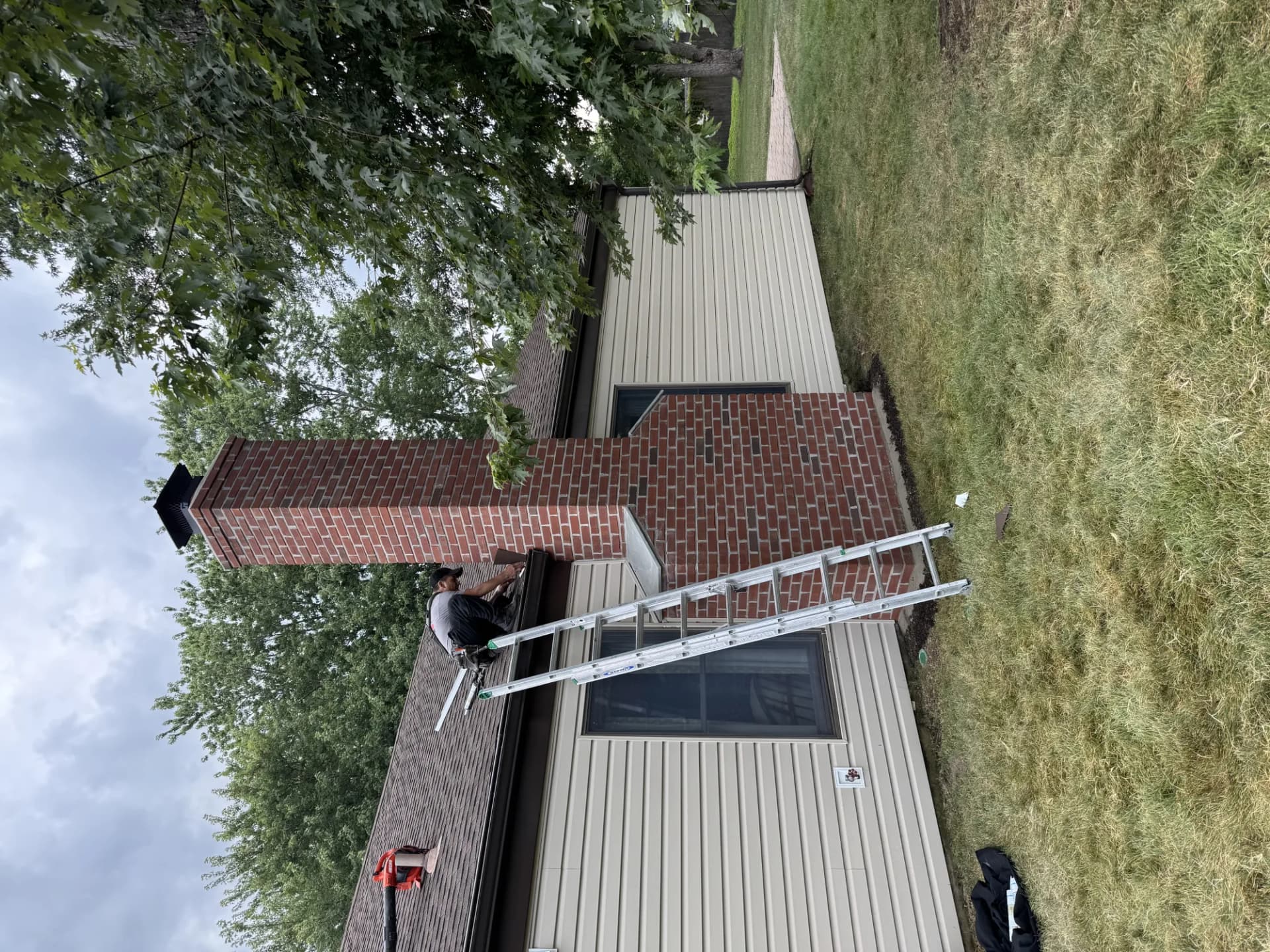
Chimney repair in Bridgewater and across New Jersey turns up the same root cause more often than any other, water working into masonry that was never designed to be fully waterproof in the first place. Brick and mortar are porous by nature, and understanding that is the key to understanding why chimneys leak and what treatments actually fix it versus what just delays the damage.
This guide covers the materials-science side of chimney and masonry waterproofing, distinct from the mechanical repairs like a new crown or cap covered elsewhere on our blog.
Why Masonry Absorbs Water in the First Place
Brick and mortar are porous materials, and water moves into them through capillary action the same way it wicks up a paper towel. That is different from a roof membrane, which is engineered to shed water off a continuous surface rather than absorb any of it.
Some absorption is normal and expected in masonry design. The problem starts when water has no way to dry back out between rain events, or when absorption becomes chronic because a crown, flashing detail, or mortar joint has already failed nearby.
New Jersey’s Freeze-Thaw Cycle and Spalling
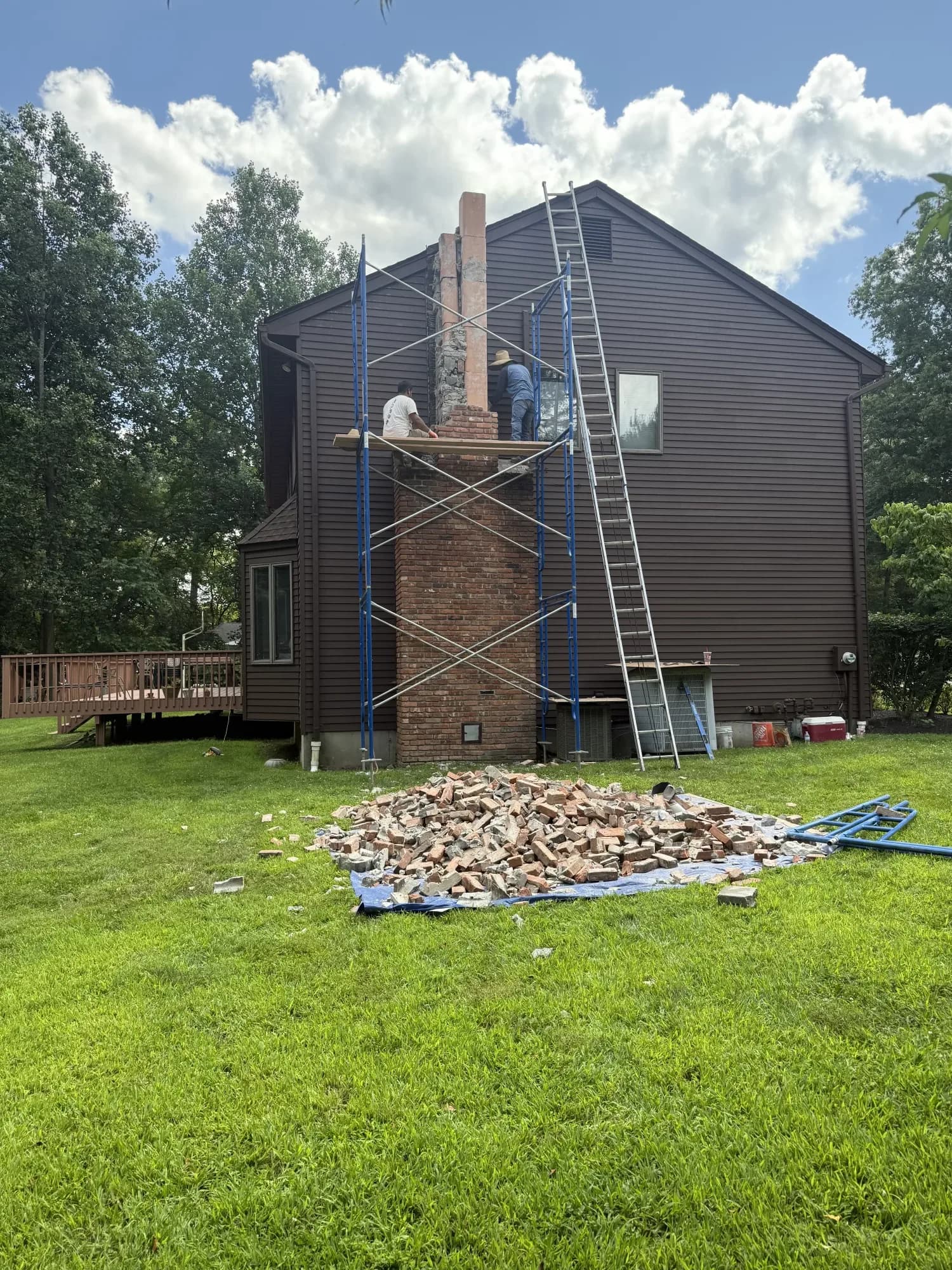
Water absorbed into brick and mortar expands by roughly nine percent when it freezes. In a New Jersey winter, that freeze-thaw cycle repeats over and over, and each cycle pushes a little harder against the masonry from the inside, eventually causing spalling, where the face of the brick flakes and cracks away.
This is a different mechanism from a roof ice dam, which forms from attic heat loss melting snow that refreezes at the eave, a separate topic we cover in our guide to ice dam prevention for New Jersey roofs. Masonry freeze-thaw damage happens inside the brick and mortar itself, regardless of what is happening on the roof deck.
Efflorescence: The White Staining That Signals a Problem
Efflorescence is the chalky white residue sometimes visible on a chimney’s brick surface. It forms when water dissolves mineral salts inside the masonry and carries them to the surface, where they are left behind as a white crystalline deposit once the water evaporates.
Efflorescence is not damage by itself, but it is visible proof that water is actively moving through the masonry. A chimney that develops noticeably more staining after every rain is worth having assessed before the underlying moisture problem causes real structural damage.
Breathable vs Non-Breathable Sealers: A Critical Difference
A vapor-permeable masonry water repellent, typically a siloxane or silane-based formula, sheds liquid rainwater off the surface while still allowing water vapor already inside the masonry to escape. That breathability is what makes it an effective long-term treatment rather than a temporary fix.
A non-breathable, film-forming sealer, the glossy paint-on type, does the opposite. It traps moisture that is already inside the brick and mortar, and with nowhere to escape, that trapped water pushes outward through the next freeze-thaw cycle instead of drying out, often making spalling worse than doing nothing at all.
Where Chimneys Actually Leak
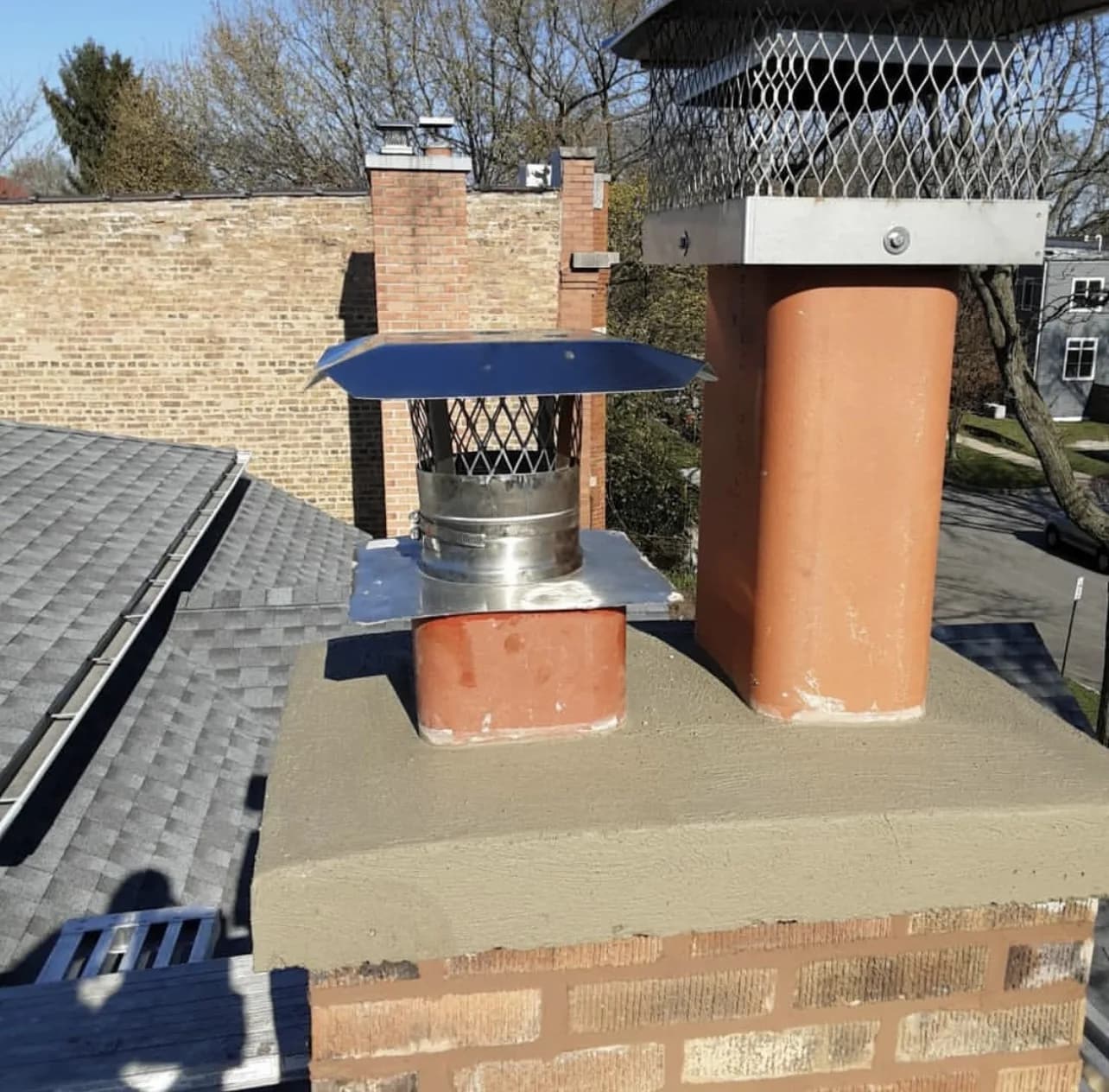
A leak rarely comes from "the chimney" as one vague unit. In practice, water gets in through three specific points: a cracked crown at the top, failed flashing where the chimney meets the roofline, which is the single most common point of chimney-related roof leaks, or deteriorating mortar joints along the stack itself.
We cover the crown and cap mechanically, including when to repair versus replace each one, in our guide comparing chimney crowns and chimney caps in New Jersey. Waterproofing treatment protects sound masonry, it does not substitute for fixing a cracked crown or failed flashing that is actively letting water in.
Interior Warning Signs to Watch For
Watch for water stains on ceilings or walls near the chimney, a persistent damp or musty smell near the fireplace, or discoloration around the firebox itself. These signs often show up well before any exterior damage is obvious from the ground.
Catching these early keeps a masonry waterproofing project from turning into an interior drywall and insulation repair on top of the original problem. The Chimney Safety Institute of America recommends an annual chimney inspection independent of any waterproofing work, precisely because interior signs like these are often the first indication of a problem.
Need a Roof You Can Trust?
Free written estimates and 24-hour emergency service across New Jersey since 2015.
How Masonry Waterproofing Connects to Repointing
Repointing, also called tuckpointing, repairs mortar joints that have already deteriorated by removing the damaged mortar and replacing it with new. Waterproofing treatment protects masonry that is still structurally sound going forward. Our plain-English guide to brick pointing covers that repair process in detail.
These two services are sequential, not interchangeable. Applying a water repellent over mortar joints that are already crumbling just seals in the existing damage rather than solving it, which is why a proper masonry inspection comes before any waterproofing product gets applied.
What a Professional Waterproofing Application Involves
The process starts with an inspection, not a spray gun. A qualified crew checks the crown, flashing, and mortar joints first, since applying a water repellent over an active leak point only delays the discovery of the real problem. Any needed repointing or crown and flashing repair happens before waterproofing, never after.
Once the masonry is sound, the surface gets cleaned to remove dirt, efflorescence, and any old coating residue that would block proper absorption, then the breathable repellent is applied in one or two coats depending on the product and the porosity of the brick. The treatment needs a dry cure window, so timing around New Jersey’s rain forecast matters as much as the product itself.
How Long a Waterproofing Treatment Lasts
A quality siloxane or silane-based treatment typically holds up for five to ten years on a properly prepared chimney, though sun exposure, the chimney’s orientation, and the specific mortar and brick composition all affect that range. A south- or west-facing chimney that takes the most direct sun tends to see the treatment break down faster than a shaded north-facing stack.
Reapplication is far cheaper and less invasive than the repointing or crown replacement that follows years of untreated freeze-thaw damage, which is the real financial case for treating masonry proactively rather than waiting for visible spalling to force the issue.
Waterproofing Beyond the Chimney
The same porous-masonry logic that applies to a chimney applies to any exposed brick or stone on a property, retaining walls, exterior steps, and brick facades all absorb water and cycle through the same freeze-thaw stress over a New Jersey winter. A masonry water repellent extends the life of these surfaces the same way it does a chimney stack.
Our masonry services cover this broader scope beyond just chimneys, since a property with an aging chimney often has other exposed masonry facing the same exposure and the same freeze-thaw risk.
Chimney and Masonry Services in New Jersey
Alpha Pro Construction handles chimney repair and masonry services together, which matters for a problem like chimney leaks that usually involves both a masonry component and a flashing or crown component at the same time.
If you are seeing water stains near your chimney or noticeable efflorescence after rain, request a free estimate for a chimney and masonry inspection before the next freeze-thaw cycle adds to the damage.
Chimney and Masonry Waterproofing - Why Your Chimney Leaks and How to Stop It - FAQs
Can You Waterproof a Chimney Yourself?
A DIY sealer applied without assessing the masonry’s condition first can trap moisture and make spalling worse if it is not a breathable, vapor-permeable product. A professional inspection identifies whether repointing is needed before waterproofing, and applies the correct siloxane or silane-based repellent rather than a film-forming sealer that traps water inside.
What Is Efflorescence on a Chimney?
Efflorescence is the white, chalky residue that appears on brick when water dissolves mineral salts inside the masonry and deposits them on the surface as it evaporates. It is not damage by itself, but it is visible proof that water is moving through the masonry and worth having assessed, especially if it increases after rain.
Why Do Chimneys Leak More Than the Rest of the Roof?
Chimneys combine porous masonry with a roof penetration, which means they have two separate failure points a typical roof section does not: the masonry itself absorbing and cycling water through freeze-thaw damage, and the flashing where the chimney meets the roofline, which is the single most common source of chimney-related leaks.
Should I Seal My Chimney Every Year?
Not necessarily every year. A quality breathable masonry water repellent, properly applied to sound masonry, typically lasts several years before it needs reapplication. An annual visual check for new cracks, efflorescence, or crown damage is more useful than resealing on a fixed yearly schedule regardless of condition.