Blog · Chimney & Masonry
Chimney Crown vs Chimney Cap in New Jersey - What Is the Difference?
Homeowners searching for chimney services in Bridgewater NJ often mix up the chimney crown and the chimney cap, and the confusion is understandable since both sit at the top of the chimney and both protect against water. They are different parts with different jobs, and knowing which one has failed determines whether the fix is a mortar repair or a metal part replacement.
Getting this distinction right matters in New Jersey, where freeze and thaw cycles are hard on masonry, and a small crack in the wrong part can let water into the chimney structure for an entire winter before anyone notices.
What Is a Chimney Crown?
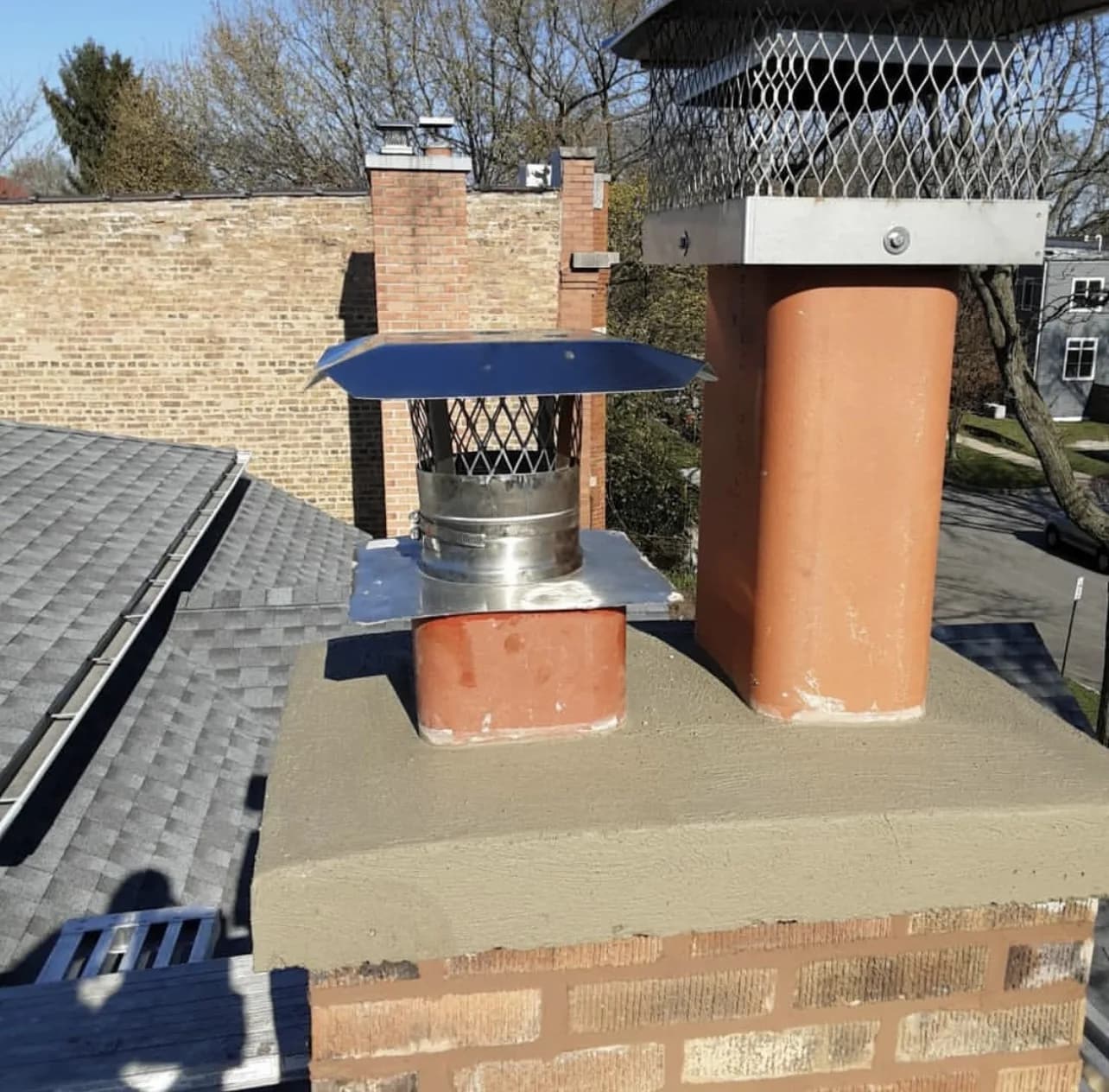
The chimney crown is the concrete or mortar slab that covers the very top of the masonry chimney structure, sloped to shed water away from the flue and off the sides of the chimney. It is a permanent, poured or troweled component, not something that gets removed or replaced as a single unit the way a cap does.
A properly built crown overhangs the brick slightly and slopes away from the flue, so water runs off rather than pooling on top of the masonry.
What Is a Chimney Cap?
The chimney cap is the metal cover that sits on top of the flue itself, usually stainless steel or copper, supported on legs above the crown. Its job is to keep out rain, snow, birds, and debris while still allowing smoke and gases to vent freely.
Unlike the crown, a cap is a discrete manufactured part that can be unscrewed and replaced independently without any masonry work, as long as the crown underneath is sound.
What Is the Main Difference Between a Crown and a Cap?
The crown is masonry, poured concrete or mortar covering the top of the chimney structure. The cap is metal, sitting above the flue opening on legs. A failing crown means cracked or spalling concrete that needs patching or a full crown rebuild, while a failing cap means a rusted or dented metal part that gets unscrewed and swapped for a new one.
Signs Your Chimney Crown Is Failing
Watch for these signs that point to crown damage rather than a cap problem.
- Visible cracks running across the concrete or mortar surface on top of the chimney
- Chunks of concrete missing or spalling away from the crown
- Water stains on the interior chimney chase or ceiling near the chimney
- Efflorescence, a white powdery mineral deposit, on the brick below the crown
Need a Roof You Can Trust?
Free written estimates and 24-hour emergency service across New Jersey since 2015.
Signs Your Chimney Cap Needs Replacement
Watch for these signs that point to the cap rather than the crown.
- Visible rust or corrosion on the metal cap
- A cap that is bent, dented, or missing entirely after a storm
- Water entering the flue despite a sound-looking crown
- Animal or bird nesting material found in the flue
How Much Does Chimney Crown or Cap Repair Cost in New Jersey?
Cost depends heavily on which part needs attention and how extensive the damage is.
| Repair Type | Typical NJ Cost |
|---|---|
| Chimney cap replacement | $150 to $500 |
| Crown sealant or minor patch | $200 to $600 |
| Full chimney crown rebuild | $500 to $2,000 |
Chimney Crown and Cap Repair From Alpha Pro Construction
Alpha Pro Construction provides chimney services in Bridgewater NJ and across Somerset County, including crown repair, cap replacement, and full chimney rebuilds when the damage goes further than the top of the structure. Call (267) 323-0002 or request a free chimney inspection to find out exactly which part needs attention.
We carry NJ HIC license 13VH11413900 and check both the crown and the cap during every chimney inspection, since a homeowner reporting one problem often has early signs of the other developing too.
Can You Have a Cap Without a Crown, or a Crown Without a Cap?
Every masonry chimney has a crown, since it is a structural part of the chimney itself, but not every chimney has a cap installed, particularly on older homes. The Chimney Safety Institute of America recommends a cap on every chimney, since it is inexpensive insurance against water, animals, and downdrafts, and it protects the crown and flue lining from the moisture exposure that shortens their life. Once the crown and cap are sound, our guide to chimney and masonry waterproofing covers the next layer of protection, treating the brick itself against the freeze-thaw damage that a sound crown and cap cannot fully prevent on their own.
Chimney Crown vs Chimney Cap in New Jersey - What Is the Difference? - FAQs
Is a Chimney Crown the Same as a Chimney Cap?
No. The crown is the concrete or mortar slab covering the top of the masonry chimney structure. The cap is the separate metal cover sitting above the flue opening on legs. They serve related but distinct purposes and fail in different ways.
Can I Repair a Chimney Crown Myself?
Minor sealant application is sometimes a DIY task, but structural cracks or spalling concrete should be repaired by a professional, since improper patching often traps moisture and accelerates the damage rather than fixing it.
How Often Should a Chimney Cap Be Inspected?
A chimney cap should be checked at least once a year, ideally during an annual chimney inspection, and again after any major storm that could have bent or dislodged it.
Does Homeowners Insurance Cover Chimney Crown or Cap Damage?
Insurance typically covers sudden damage from storms or falling debris, but not gradual deterioration from age or lack of maintenance. Document any storm-related damage promptly and file a claim the same way you would for roof damage.