Blog · Chimney & Masonry
What Is Brick Pointing? A Plain-English Guide for NJ Homes
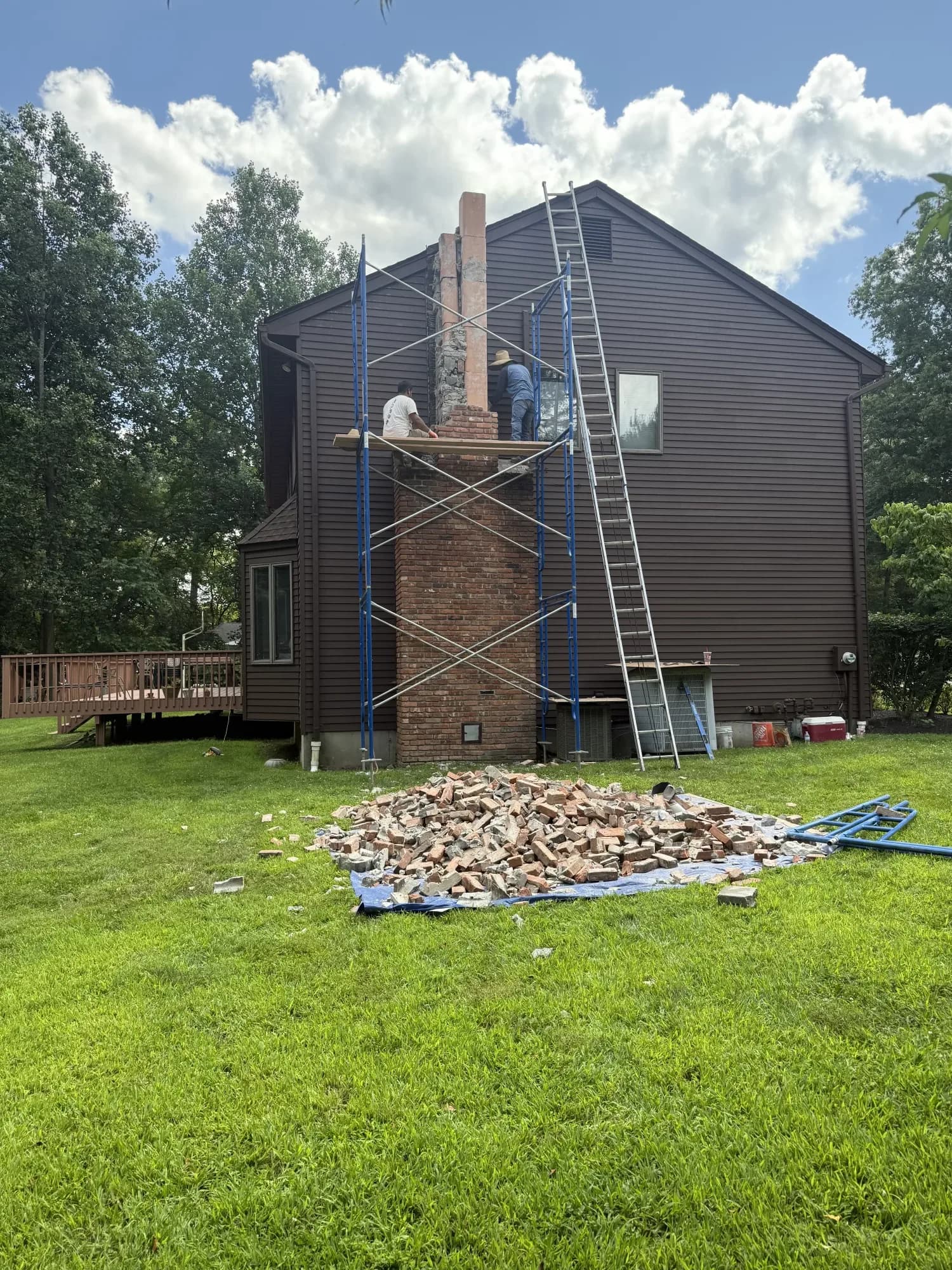
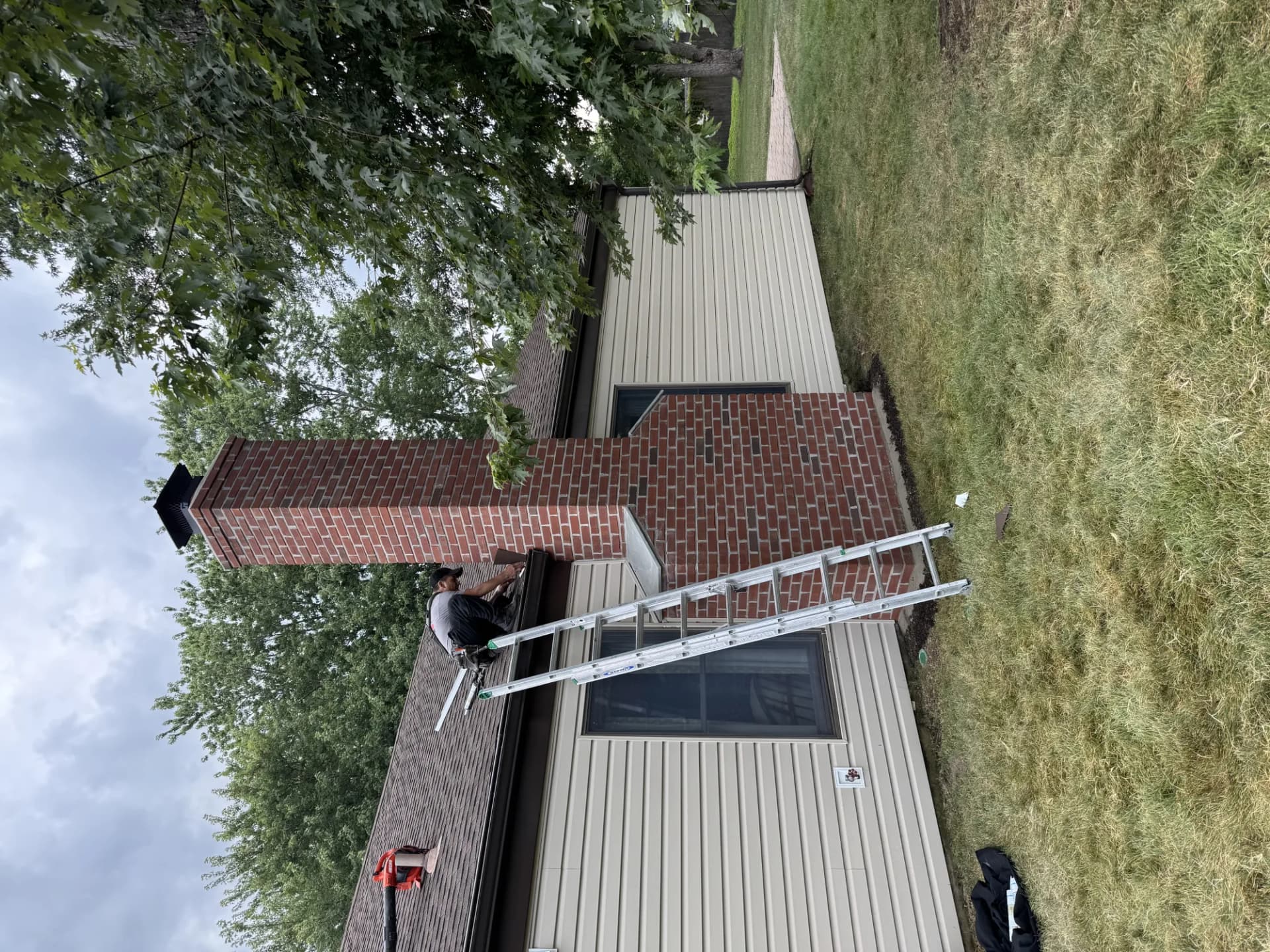
Brick pointing is the process of packing fresh mortar into the joints between bricks after the original mortar has cracked, crumbled, or washed out. Done on time, it is routine maintenance that keeps water out of the wall. Ignored for a decade, it is how a chimney ends up as a pile of brick on a tarp in the backyard. Our masonry services in Bridgewater see both versions every season.
This guide explains the difference between pointing, repointing, and tuckpointing, why mortar fails long before brick does, the signs to look for on your own walls and chimney, and what separates a repointing job that lasts 50 years from one that fails in five.
Pointing, Repointing, and Tuckpointing: What Each Term Means
The terms get used interchangeably, including by contractors, but they have distinct meanings:
| Term | What It Means | When It Applies |
|---|---|---|
| Pointing | Packing mortar into the joints as a wall is first built | New construction |
| Repointing | Grinding out failed mortar and packing in new | Maintenance on existing brick, the job most homes need |
| Tuckpointing | Repointing with two mortar colors to fake thin, crisp joints | Decorative and historic work, often used loosely to mean repointing |
| Grinding or raking | Cutting the old joint out to a set depth | The prep stage of every repointing job |
Why Mortar Fails Before Brick Does
This is by design. Mortar is intentionally softer than brick so that moisture and movement wear the joints, which can be renewed, instead of the brick faces, which cannot. A hard brick can last well over 100 years, while the mortar protecting it is doing well to last 40 or 50.
New Jersey shortens that schedule. Our winters cycle above and below freezing dozens of times a season, and every cycle pushes water a little deeper into any hairline gap, freezes, and pries the joint open further. South- and west-facing walls and anything exposed on all four sides, which is to say chimneys, wear fastest.
7 Signs Your Brick Needs Repointing
You can survey your own walls from the ground with binoculars. Look for:
- Mortar joints recessed noticeably deeper than the brick face
- Mortar that crumbles to sand when scraped with a key
- Hairline or stair-step cracks running through the joints
- White, chalky staining (efflorescence) on the brick, a sign water is moving through the wall
- Damp patches or peeling paint on interior walls behind brick
- Individual bricks that rock or sit loose
- Sand and mortar fragments collecting at the base of the wall or in the fireplace
How Professional Repointing Is Done
A proper job is mostly preparation. The failed mortar is ground or raked out to a depth of roughly two and a half times the joint width, about three quarters of an inch on a standard joint, without nicking the brick edges. The joints are brushed clean and dampened so the brick does not steal water from the fresh mortar.
New mortar then goes in layered lifts, packed tight, and is tooled to match the original joint profile once thumbprint-hard. Temperature matters: mortar wants a window roughly between 40 and 90 degrees and protection from rain and hard freezes while it cures over the following days. Rushing any of this is how five-year failures happen.
Matching the Mortar Matters More Than It Sounds
Mortar comes in standard types, and using the wrong one actively damages old brick. Mortar that is harder than the brick it surrounds forces moisture and movement into the brick faces themselves, which then spall and flake off, an irreversible harm common on older homes repointed with bagged high-strength mix. The Brick Industry Association publishes the standards, and a good mason works to them:
| Mortar Type | Compressive Strength | Where It Belongs |
|---|---|---|
| Type N | About 750 psi | General above-grade walls, most modern brick homes |
| Type S | About 1,800 psi | Below grade, foundations, and high-load masonry |
| Type O | About 350 psi | Older, softer brick and repointing historic walls |
| Type K | About 75 psi | Preservation work on the softest historic masonry |
Why Chimneys Go First in New Jersey
A chimney is the most exposed masonry on the house: weather on all four sides, no roof overhang protecting it, flue gases warming it from inside while winter freezes it from outside, and a crown on top taking rain like a sidewalk. The same joints that last 50 years in a sheltered wall can fail in 20 up there.
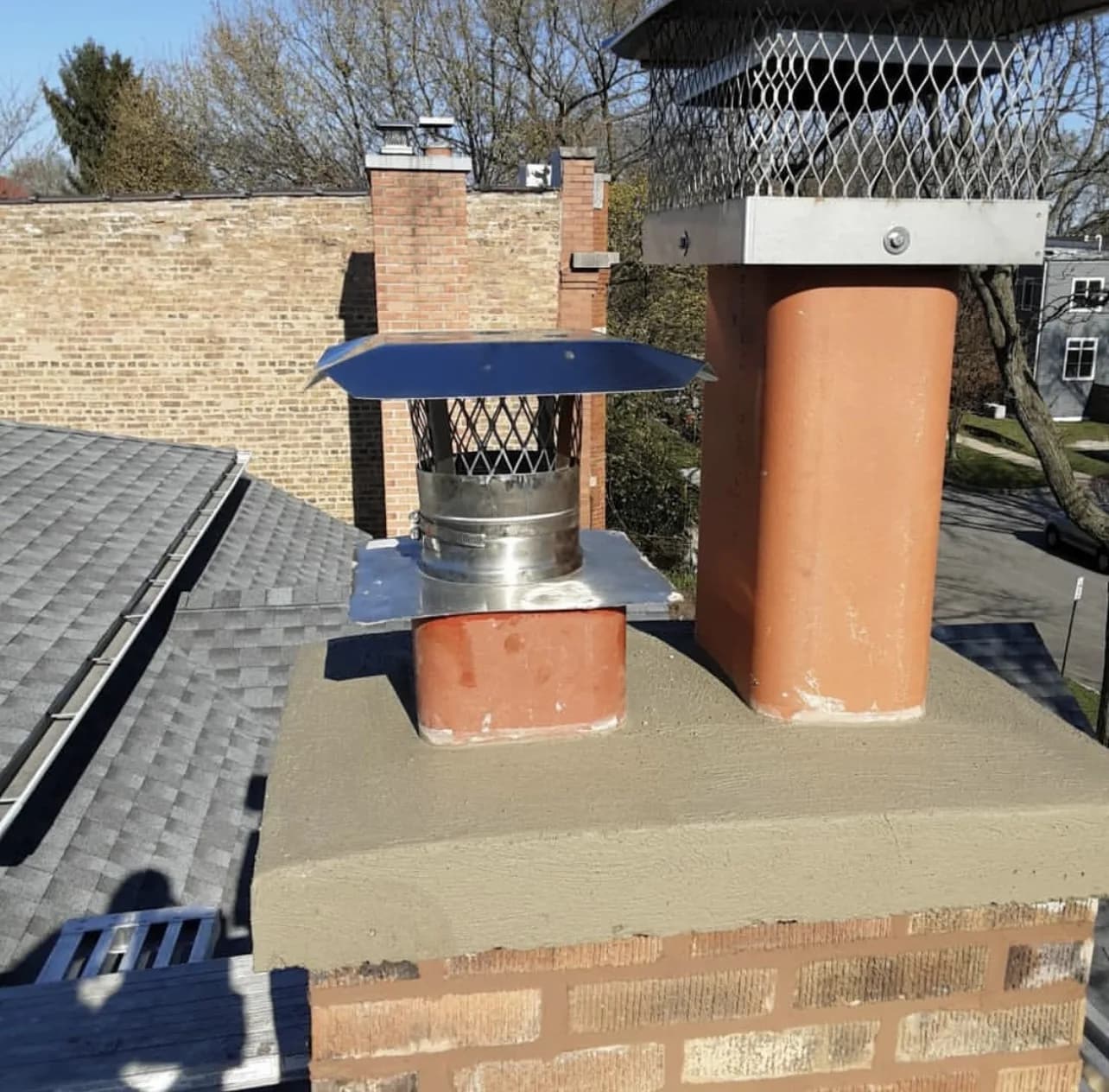
Failed chimney joints also leak indoors, showing up as stains around the fireplace or in the attic alongside the flue. Chimney repair in Bridgewater typically combines repointing with crown repair and flashing work, because by the time the joints are open, water has usually found the other weak points too. Our chimney services crews inspect all three together.
Need a Roof You Can Trust?
Free written estimates and 24-hour emergency service across New Jersey since 2015.
Repointing or Rebuild: How to Tell
Repointing renews the joints, but it cannot straighten a leaning chimney or restore bricks that have spalled and cracked through. The working rule: if the bricks are sound and the structure is plumb, repoint; if bricks are loose by the handful, faces are flaking off, or the stack has started to lean or step-crack through the units themselves, the upper courses come down and get rebuilt.
The photo on this article is what the second case looks like: a chimney past the point of pointing, taken down to sound brick and rebuilt. A rebuild is also the moment to add a proper flue liner and cap, which is work our chimney installation in Bridgewater crews handle alongside the masonry.
What Efflorescence Tells You About Your Wall
Those white, chalky streaks on brick are efflorescence: mineral salts left behind when water moves through the masonry and evaporates at the surface. The stain itself is harmless and brushes off dry, but it is a messenger. Salts only reach the surface when water is traveling through the wall, which means moisture is getting in somewhere, usually through failed joints, a cracked crown, or missing flashing above.
Fresh efflorescence after a wet season on an older wall is the earliest cheap warning you will get. Find and fix the water path while the repair is still repointing and flashing, not brick replacement. Repeated scrubbing without fixing the source just polishes the symptom. Our guide to chimney and masonry waterproofing covers the breathable treatments that stop this cycle once the joints themselves are sound.
Lime Mortar Versus Portland Cement on Older New Jersey Homes
New Jersey has a deep stock of pre-1930 brick housing, and most of it was laid with soft, lime-based mortar. Brick from that era was fired softer too, and the two were matched: the wall flexes and breathes as a system. Repointing those joints with modern Portland-heavy mix, the standard hardware-store bag, locks a rigid grid around soft brick, and within a few winters the brick faces start popping off.
The fix is matching, not upgrading. A mason working on older masonry tests or dates the original mortar and matches its softness with a Type O or lime-rich blend, even though it feels counterintuitive to install weaker mortar on purpose. On 19th and early 20th century brick, the soft mortar is the correct mortar, and it is the difference between preservation and slow demolition.
Can You Repoint Brick Yourself?
A patient homeowner can repoint a garden wall or a few accessible joints: the materials are inexpensive and the skill is learnable. The risks are using mortar that is too hard for the brick, gouging brick edges with a grinder, and smearing joints that then read badly across the whole wall face.
Chimneys are a different question. The work happens at the worst height on the house, on staging, often near the roofline you can damage, and the mortar chemistry matters more because the exposure is total. Between the scaffold cost and the consequence of a bad mix, chimney repointing is professional work.
What a Repointing Estimate Depends On
There is no honest per-foot flat rate, because three factors swing the price: access (a ground-floor wall versus a scaffold around a two-story chimney), the condition of the joints (surface renewal versus deep raking and partial rebuilds), and the matching work (standard gray Type N versus color-matched lime mortar on a 1920s facade).
What you should always get is a written, itemized estimate that names the mortar type, the grinding depth, the area covered, and the warranty. Alpha Pro Construction provides that in writing, free, after looking at the actual wall, which is the only honest way to price masonry.
What Is Brick Pointing? A Plain-English Guide for NJ Homes - FAQs
How Long Does Repointing Last?
Done correctly, with the joints raked to proper depth and the mortar matched to the brick, repointing lasts 40 to 50 years on a sheltered wall and 20 to 30 on an exposed chimney in New Jersey weather. Done badly, with shallow grinding or too-hard mortar, it can fail within five years.
What Is the Difference Between Repointing and Tuckpointing?
Repointing is the repair: old mortar out, new mortar in. Tuckpointing is strictly a decorative version using two mortar colors to imitate fine joints, though many contractors use the word loosely to mean repointing. When comparing quotes, confirm what work is actually included rather than relying on the term.
How Do I Know If My Chimney Needs Repointing or Rebuilding?
Look at the bricks, not just the joints. Crumbling mortar with sound, plumb brickwork means repointing. Loose bricks, flaking brick faces, a visible lean, or cracks running through the bricks themselves mean the damaged courses need to come down and be rebuilt. An on-site inspection settles it quickly.
What Happens If I Ignore Failing Mortar Joints?
Water enters the wall and the freeze-thaw cycle accelerates the damage each winter. Joints that needed simple repointing progress to loose bricks, spalled faces, interior leaks, and eventually structural movement. On chimneys the end state is a partial teardown and rebuild, which costs several times what timely repointing does.