Blog · Roofing Tips
Why Is My Roof Leaking? 9 Common Causes and Fixes (2026)
A water stain spreading across the ceiling raises two questions at once: where is it coming from, and how bad is it? The good news is that most leaks start at a handful of predictable weak points, not in the middle of the roof field, and an experienced eye can usually trace one in under an hour. If water is coming in right now, professional roof repair in New Jersey is a same-day call, not a someday project.
This guide walks through the nine places New Jersey roofs leak most, how to match what you see inside the house to the source on the roof, what you can safely do yourself today, and what a proper repair involves once the weather clears.
The 9 Most Common Roof Leak Causes in New Jersey
Roofers see the same culprits over and over, and almost all of them are details rather than the roof surface itself. In rough order of frequency:
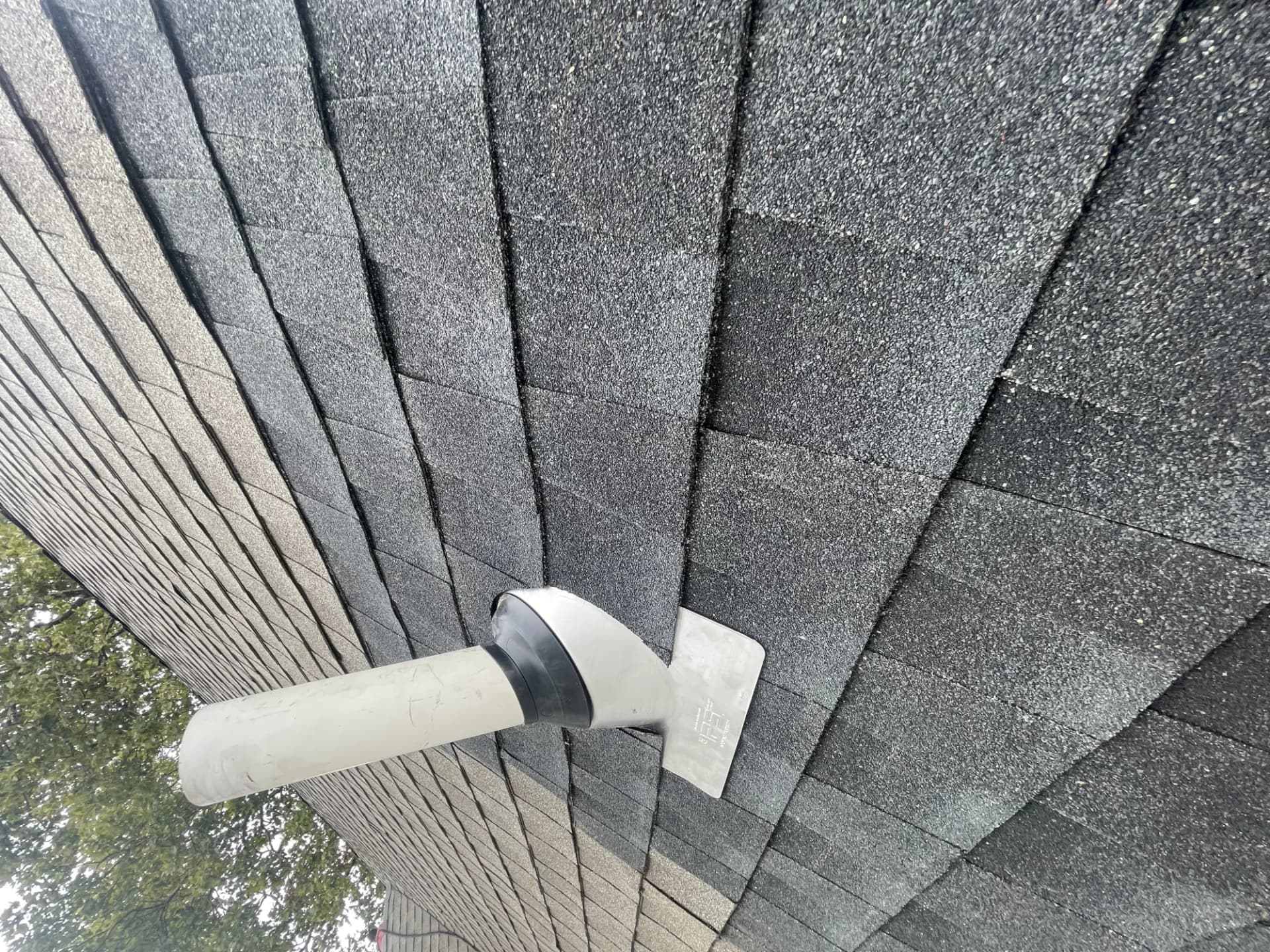
- 1. Cracked or split rubber pipe boots around plumbing vents
- 2. Failed flashing where the roof meets a chimney or wall
- 3. Shingles torn or lifted by wind
- 4. Ice dams backing meltwater up under the shingles
- 5. Clogged gutters and valleys holding water against the roof edge
- 6. Nail pops and exposed fasteners working loose over time
- 7. Skylight seals and skylight flashing past their service life
- 8. Cracked chimney crowns and open mortar joints
- 9. Worn-out shingles at the end of their lifespan
Match the Symptom to the Likely Source
Water travels along rafters and decking before it drops, so the stain inside rarely sits below the entry point. The pattern of when and where it appears narrows the search considerably:
| What You See Inside | Most Likely Source | Typical Fix | Urgency |
|---|---|---|---|
| Stain near a bathroom or kitchen ceiling fan | Cracked pipe boot or vent flashing | Replace the boot and surrounding shingles | High |
| Stains around the fireplace or chimney chase | Chimney flashing, crown, or mortar joints | Re-flash, repair the crown, repoint joints | High |
| Drips only during wind-driven rain | Lifted shingles or wall step flashing | Re-secure or replace the affected course | Medium |
| Wet insulation along the eaves in late winter | Ice dam pushing meltwater under shingles | Clear the dam, then fix ventilation and add ice shield | High |
| Stain at the corner of a skylight | Skylight seal or flashing kit failure | Reseal or replace the flashing kit | Medium |
| Scattered ceiling spots after heavy rain | Nail pops or exposed fasteners | Reset fasteners, seal, replace damaged shingles | Medium |
| Stain at the top of an exterior wall | Missing kick-out flashing at a roof-wall joint | Install kick-out flashing, repair siding entry | High |
Why the Drip Is Rarely Below the Hole
Water that gets past the shingles lands on the underlayment or the deck and then follows gravity along the slope, riding rafters and seams sideways for several feet before it finds a joint in the decking or a light fixture to drop through. A stain over the hallway can trace back to a pipe boot ten feet upslope.
That travel is why chasing a leak with a caulk gun from the inside almost never works, and why a roofer starts above the stain and works uphill, checking every penetration and flashing detail between the stain and the ridge until the entry point shows itself.
What to Do the Moment You See a Leak
Before anyone climbs on the roof, limit the damage inside. The first hour matters more than the next day:
- Move furniture and electronics out from under the drip and lay down towels or a tarp
- Put a bucket under the drip and, if the ceiling is bulging, pierce the bulge with a screwdriver to drain it in a controlled spot
- Photograph everything, including the stain, the drip, and any damaged belongings, for a possible insurance claim
- Stay off the roof, especially when it is wet, and leave tarping to a crew with harnesses
- Note the weather when it leaks, since wind-only or winter-only leaks point to different sources
How Long Roof Components Last Before They Leak
Most leaks are a component reaching the end of its service life rather than storm damage. Knowing the typical lifespans tells you what to suspect first on a roof of a given age:
| Component | Typical Service Life | Common Failure Mode |
|---|---|---|
| Rubber pipe boot collar | 10 to 15 years | UV cracking around the pipe |
| Roofing sealant and caulk | 5 to 10 years | Drying, shrinking, pulling away |
| Skylight seals and flashing kits | 15 to 20 years | Seal failure at the corners |
| Chimney crown mortar | 20 to 30 years | Hairline cracks letting water in |
| Step and counter flashing | 25 to 40 years | Corrosion or pulling loose |
| Architectural asphalt shingles | 25 to 30 years in NJ | Granule loss, cracking, blow-offs |
| Ice and water shield membrane | 25 to 30 years | Ages with the roof above it |
Need a Roof You Can Trust?
Free written estimates and 24-hour emergency service across New Jersey since 2015.
Can You Patch a Roof Leak Yourself?
Sometimes, briefly. A homeowner comfortable on a ladder can apply roofing cement under a single lifted shingle tab or replace an accessible pipe boot, and a properly anchored tarp can buy a week. These are stopgaps that hold until a permanent repair, not substitutes for one.
The honest limits: steep or wet roofs are genuinely dangerous, flashing work takes tools and technique most homeowners do not have, and a bad patch can trap water and make the entry point harder to find later. If the leak involves a chimney, a valley, a skylight, or anything beyond one shingle, it is a professional job.
What a Professional Leak Repair Includes
A proper repair starts with finding the true entry point, not the drip. Expect a moisture trace from the attic, an inspection of every penetration upslope of the stain, and an honest verdict on whether this is one failed detail or a symptom of a wider problem. Roof repair in Bridgewater and the surrounding towns starts with exactly that kind of free roof inspection.
The fix itself depends on the source: a new boot and shingles around a vent, fresh step flashing cut into the wall line, a rebuilt valley, or resealed skylight flashing. Done right, the repaired detail should outlast the surrounding roof, and you should get the finding, the fix, and the warranty in writing.
When a Leak Means the Roof Is Done
One failed boot on a 12-year-old roof is a repair. A third leak in two years on a 23-year-old roof is a message. When the shingles are bald, the field is cracking, and every storm finds a new way in, each patch is buying months rather than years, and the money is better put toward roof replacement in Bridgewater than toward chasing the next drip.
The decision point is simpler than it feels: if the roof is past 20 years and leaking in multiple spots, get a replacement estimate alongside the repair quote and compare the cost per year of life each one buys.
Mold, Rot, and the Cost of Waiting
A slow leak is more expensive than a fast one, because it works quietly. Damp decking rots, insulation mats down and stops insulating, and indoor mold growth can start on wet building materials within 24 to 48 hours, turning a roofing bill into a remediation bill.
The difference between a leak fixed this week and the same leak fixed next season is often the difference between replacing a pipe boot and replacing a section of deck, the insulation below it, and a bedroom ceiling. Water never gets cheaper to ignore.
Leaking Roof in Central New Jersey?
Alpha Pro Construction repairs roof leaks across Somerset County and the surrounding area from our Bridgewater headquarters, with 24-hour storm damage repair in Bridgewater when water will not wait for morning. Every repair starts with a free inspection and a written, itemized estimate, so you know the real source and the real cost before any work begins.
If the stain on your ceiling is new, the best time to trace it is before the next rain. Call, or send a few photos through the quote form, and we will tell you honestly whether it is a one-hour fix or something bigger.
Why Is My Roof Leaking? 9 Common Causes and Fixes (2026) - FAQs
How Do I Find Where My Roof Is Leaking From?
Start in the attic with a flashlight during or just after rain and follow the water trail uphill, since leaks travel along rafters and decking before dripping. Outside, check the closest penetration upslope: pipe boots, chimney flashing, skylights, and valleys cause most leaks. A professional inspection confirms the true entry point.
Is a Roof Leak an Emergency?
An active drip during a storm is urgent: contain the water, protect your belongings, and call for emergency service, since trapped moisture can start mold growth within 24 to 48 hours. A dry stain from a past leak still needs prompt attention, but it can usually wait for a scheduled inspection.
How Much Does It Cost to Fix a Leaking Roof in New Jersey?
It depends on the source. Replacing a pipe boot is a small job, while rebuilt chimney flashing or a new valley costs more, and hidden deck rot adds to any repair. There is no honest flat rate, which is why Alpha Pro Construction provides a free, written, itemized estimate before any work.
Will Homeowners Insurance Cover a Roof Leak?
Usually only when the leak comes from sudden, accidental damage such as a storm tearing shingles off, and not when it comes from age or deferred maintenance. Photograph the damage, save the repair records, and report storm-related leaks quickly, since most policies have time limits on claims.