Blog · Storm Damage
Temporary Roof Repair in NJ - What Is Safe to Do Before the Roofer Arrives
When water is coming through the ceiling at night, you cannot simply wait for a roofer to arrive, but you also should not climb onto a wet roof. The safest temporary roof repair is usually done from inside the house, and the roof itself is best left to a crew with the right equipment. If the leak is active, call for 24-hour emergency roof repair first, then use the steps below while you wait.
This guide covers what you can safely do inside, which temporary fixes are realistic, and the situations where trying to patch the roof yourself costs more than it saves.
What Should I Do First When My Roof Starts Leaking?
Protect people and belongings first and the roof second. Move furniture and electronics away from the leak, put a bucket or tub under the drip, and lay towels or plastic sheeting around it. Photograph the water and the damage before any cleanup, because dated photos support an insurance claim.
If water is near a light fixture or outlet, turn off that circuit at the breaker before you go near it. If the ceiling is bulging with trapped water, puncture the lowest point of the bulge with a screwdriver over a bucket so it drains in a controlled way. A bulge left alone can release all the water at once and bring the drywall down with it.
Is It Safe to Climb on a Leaking Roof?
No. A wet roof is slick, and damaged shingles, weakened decking, and fallen branches add hazards you cannot see until you are standing on them. Ladders and roofs cause serious injuries every year, and a leak is the moment people are most tempted to take a chance.
As a rule, stay off any roof that is wet, icy, steep, higher than one story, or near power lines. If the only way to reach the leak is from the roof, the right move is to contain the water inside and call a crew. See Ready.gov’s severe weather safety guidance for more on staying safe during a storm.
Which Temporary Roof Repairs Are Realistic Without a Roofer?
Most do-it-yourself steps happen inside the house. The table shows what is reasonable for common situations and what belongs to a professional.
| Situation | Safe Temporary Step | Leave to a Professional |
|---|---|---|
| Water dripping through a ceiling | Bucket, towels, drain any bulge, move belongings, power off nearby fixtures | Finding and sealing the entry point on the roof |
| Leak during heavy rain in the attic | Tub under the drip, plastic over stored items | Locating the damaged decking or flashing |
| Water at a chimney or skylight | Catch water inside and photograph the stain | Flashing repair and resealing |
| Shingles missing after wind | Photograph from the ground, do not walk the roof | Tarping and replacing the shingles |
| Gutter overflowing at the eave | Clear debris from a stable ladder on a dry day | Repairing water that backed up under the shingles |
| Large opening from a fallen limb | Keep people out of the room below, cover openings from inside if reachable | Emergency tarping and a structural check |
Need a Roof You Can Trust?
Free written estimates and 24-hour emergency service across New Jersey since 2015.
Do Roofing Tarps and Roof Cement Work as a DIY Fix?
A tarp works when it is installed correctly, but installing it is the most dangerous part of the job. A tarp that is only weighted down or nailed through the middle flaps loose in the next gust and tears shingles. The standard method runs the tarp over the ridge and anchors the edges with wood strips, which means walking the roof.
Roof cement and sealant also fail on wet shingles, because the surface has to be clean and dry for the adhesive to bond. That is why exterior temporary repairs are better left to a crew that has the equipment and the training.
When Is a Temporary Repair Not Enough?
A temporary repair buys hours or days, not months. Call an emergency roofer right away if you see any of these signs.
- A sagging or bulging ceiling that keeps filling with water
- Water running near electrical fixtures, outlets, or the panel
- A leak that continues after the rain has stopped
- A large section of missing shingles or exposed decking
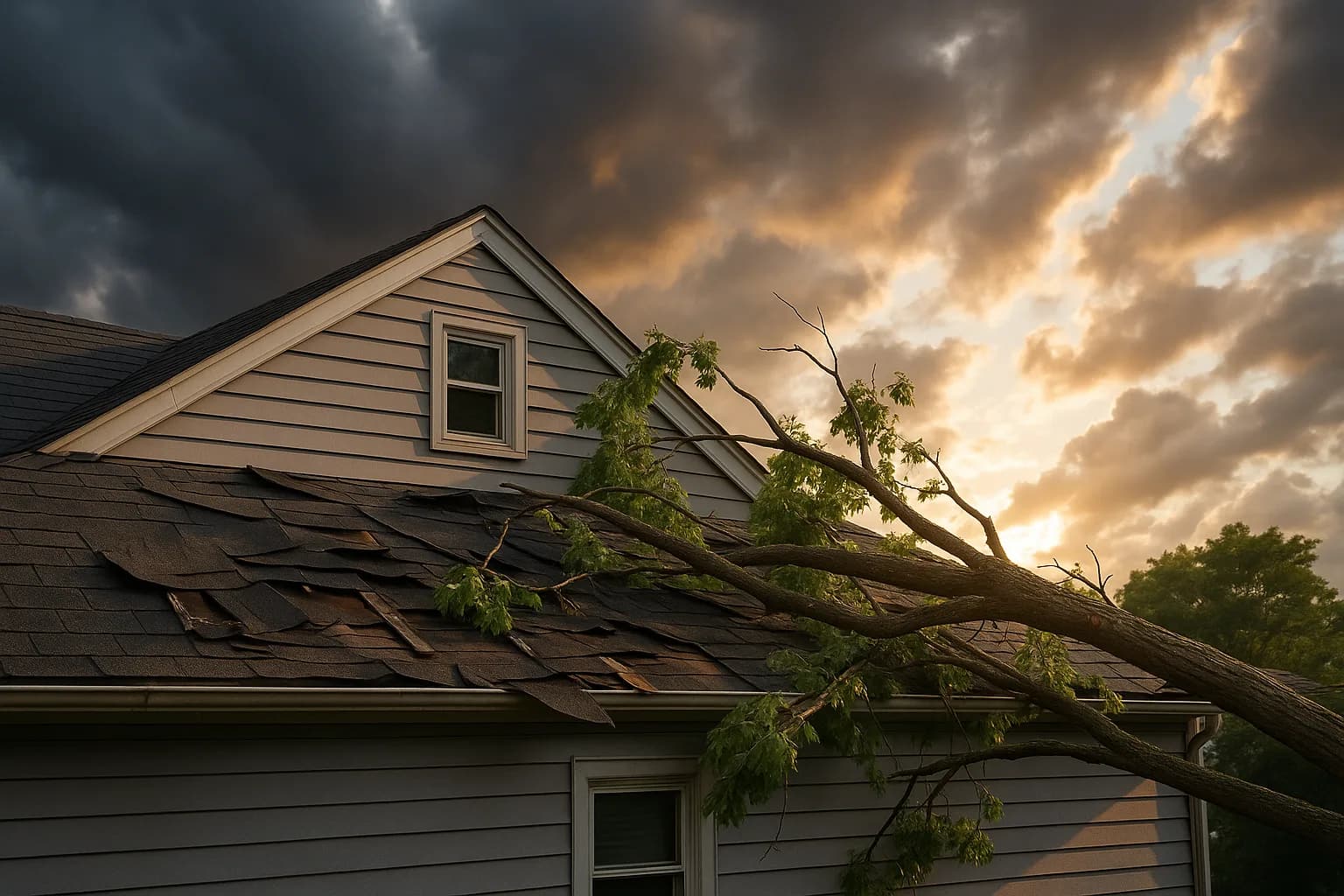
- Storm damage you can see from the ground, including a branch through the roof
What Happens After the Emergency Tarp Goes On?
The tarp stops the water, and the permanent fix follows once conditions allow. A good crew photographs the damage before and after tarping, gives you written documentation for your insurer, and then inspects the whole area to find the cause.
From there you get a written estimate for the permanent repair, which may be a targeted fix or a larger job if the decking or flashing is badly damaged. Permanent repairs from Alpha Pro Construction carry a 2-year workmanship warranty, and a full replacement carries a 30-year warranty.
Temporary Roof Repair in NJ - What Is Safe to Do Before the Roofer Arrives - FAQs
Can I Put a Tarp on My Roof Myself?
You can, but it is the riskiest do-it-yourself roof task because it means working on a wet, slick surface. A poorly anchored tarp also blows off in the next gust. If the leak can only be reached from the roof, contain the water inside and call a roofer.
How Long Does a Temporary Roof Repair Last?
A professionally installed emergency tarp is meant to hold for days to a few weeks until the permanent repair is scheduled, depending on weather and how it is anchored. A do-it-yourself patch can fail in the next storm, so treat any temporary fix as short term.
Should I Call My Insurance Company Before or After the Roofer?
Do both promptly. Call a roofer first if water is actively entering the home so the damage stops spreading, then contact your insurer and keep receipts for emergency work. Most policies expect you to take reasonable steps to prevent more damage, but your insurer decides what is covered.
What Is the Fastest Way to Stop a Roof Leak at Night?
Contain the water inside with a bucket and plastic sheeting, drain any ceiling bulge, shut off power near wet fixtures, and call an emergency roofer. Stopping water from the outside means getting onto the roof, which is unsafe in the dark and in the rain.