Blog · Roofing Tips
Flat Roof vs Pitched Roof - Which Is Best for Your Property
Flat and pitched roofs solve the same problem, keeping water out, in very different ways, and the right choice depends on the building, the budget, and how long you plan to own it. Whether you are planning a roof replacement or a new addition, understanding the trade-offs helps you spend wisely. This comparison lays them out side by side for New Jersey properties.
Most New Jersey homes have pitched roofs, while many commercial buildings, additions, and porches are flat or low-slope. Each has real strengths, and the worst outcome is forcing the wrong system onto a building because it looked cheaper up front.
Flat vs Pitched Roof at a Glance
| Factor | Flat / Low-Slope Roof | Pitched Roof |
|---|---|---|
| Typical use | Commercial, additions, porches | Most homes |
| Upfront cost | Lower per square foot | Higher, varies by material |
| Lifespan | 20+ years (EPDM, TPO, modified bitumen) | 25 to 30 years (asphalt), 50+ (metal) |
| Drainage | Relies on slight slope and drains | Sheds water and snow naturally |
| Maintenance | Higher, watch for ponding | Lower, easier to inspect |
| Usable space | Rooftop equipment, decks | Attic and ventilation room |
Cost: Which Roof Is Cheaper?
Flat roofs are usually cheaper per square foot to install, since the surface is simpler and faster to cover. Pitched roofs cost more up front, and the price varies widely with the material, from asphalt shingles at the low end to metal and tile at the high end.
Over the full life of the roof, the gap narrows. A flat roof needs more frequent attention and may be recoated or replaced sooner, so the cheaper install does not always mean the cheaper roof.
Lifespan and Durability
A pitched asphalt shingle roof lasts about 25 to 30 years in New Jersey, and a metal pitched roof can last 50 years or more. Flat roofing systems such as EPDM rubber, TPO, and modified bitumen commonly last 20 years or more when installed and drained well. On a pitched roof, proper attic ventilation also helps the surface reach its full lifespan by preventing the heat and moisture buildup that ages shingles from below.
Pitched roofs have an edge in harsh weather because they shed snow and water naturally. Flat roofs hold up fine when maintained, but standing water is their weak point, which leads to the next factor.
Drainage and New Jersey Weather
Drainage is where the two systems differ most. A pitched roof sheds rain and snow by gravity, so water spends little time on the surface. A flat roof is never truly flat; it relies on a slight built-in slope and working drains to move water off, and when that fails, water ponds.
Ponding water is the leading cause of flat-roof failure. In a New Jersey winter, freeze-thaw cycles make it worse, working at seams and the membrane until water finds a way in. A well-designed flat roof manages this, but it demands more attention than a pitched roof.
Maintenance Requirements
Pitched roofs are generally lower maintenance and easier to inspect from the ground. Flat roofs need their drains kept clear, their seams checked, and ponding addressed, especially after storms and in the fall.
Neither system is maintenance-free, but a flat roof rewards a regular check far more than a pitched one, and a reflective coating can extend a sound flat roof’s life at a fraction of replacement cost.
Which Roof Should You Choose?
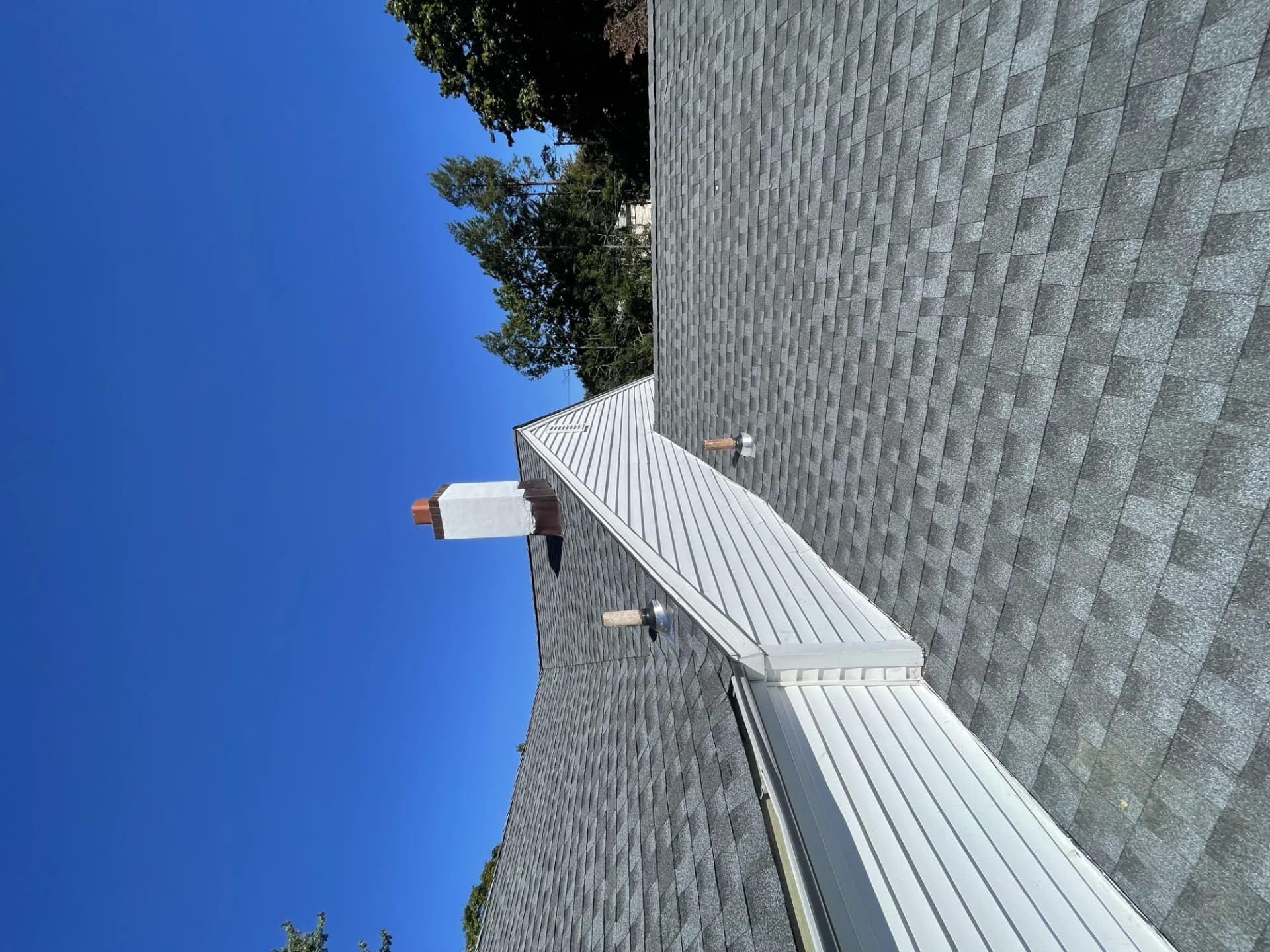
Choose a pitched roof for most homes, for the long lifespan, easy drainage, and lower maintenance. Choose a flat or low-slope roof for commercial buildings, additions, porches, and anywhere you need rooftop equipment or a usable deck, and where the structure is built for it.
Many New Jersey homes end up with both, a pitched main roof and a flat section over an addition or porch. The right answer is rarely one or the other; it is matching each part of the building to the system that suits it.
Need a Roof You Can Trust?
Free written estimates and 24-hour emergency service across New Jersey since 2015.
Materials for Flat and Pitched Roofs
The flat-versus-pitched decision also shapes which materials you can use. Flat and low-slope roofs use single-ply and built-up systems, EPDM rubber, which is durable and proven, TPO, a reflective membrane that helps cut cooling costs, and modified bitumen, an asphalt-based system that stands up to foot traffic. A reflective coating can seal and extend a sound flat roof for years.
Pitched roofs open up the full range. Architectural asphalt shingles are the popular default for their balance of cost, durability, and curb appeal, lasting 25 to 30 years. Metal roofing lasts 50 years or more and sheds snow and wind well, and tile delivers a distinctive look and exceptional life for homes built to carry the weight. The pitch lets these materials shed water the way they are designed to.
Which Roof Adds More Value?
For most New Jersey homes, a well-installed pitched roof adds more resale value and is what buyers and home inspectors expect to see. A quality architectural shingle or metal roof signals decades of protection and rarely raises questions at sale.
Flat roofs add value differently, by creating usable space. On a commercial building, an addition, or a modern home designed for it, a flat roof supports rooftop equipment, solar arrays, or a deck. The value is in the function, not the curb appeal, so the right choice depends on what you need the roof to do.
If your building has both a pitched main roof and a flat section, you do not have to choose between them. The right approach is to match each part of the roof to the system that suits it, asphalt or metal where the roof pitches and sheds water on its own, and EPDM or TPO where it lies flat and needs a membrane and good drainage. One experienced crew that handles both keeps the transition between them watertight, which is exactly where mixed roofs tend to leak.
Flat and Pitched Roofing in Bridgewater, NJ
Bridgewater and the surrounding Somerset County towns have a mix of both, pitched roofs on most homes and flat or low-slope roofs on additions, porches, and commercial buildings. Alpha Pro Construction handles both, from flat roofing in Bridgewater to a full roof replacement in Bridgewater, and we match each part of the building to the system that suits it.
If you are unsure which way to go, the fastest answer is a free on-site look. We assess the structure, the existing drainage, and how you use the space, then lay out the options and the cost of each, rather than pushing one system on every job.
Flat Roofing for Commercial Buildings and Additions
Most commercial roofs are flat or low-slope, and that is where the membrane systems earn their place. We install and repair EPDM, TPO, and modified bitumen for businesses, apartment buildings, and homes with flat sections, and provide commercial roofing across the Bridgewater area built around proper drainage.
A reflective coating can extend a sound flat roof for years at a fraction of replacement cost, which is often the right move on an aging but structurally sound commercial roof. The key on any flat roof is keeping water moving off the surface, since ponding is what shortens its life.
Material Options for a Pitched Roof
On a pitched roof, the material is yours to choose. The popular default is shingle roofing for its balance of cost and curb appeal, while metal roofing is the long-life option, lasting 50 years or more and shedding snow and wind.
Tile is a premium choice for homes built to carry it, and each of these materials sheds water naturally because the pitch does the work. We help you weigh the upfront cost against the lifespan so the roof fits both your budget and how long you plan to stay in the home.
Whichever material you choose, installation is what makes it last. The right underlayment, flashing, drip edge, and attic ventilation matter as much as the surface you see, and they are exactly the details a rushed or low-bid job skips. A roof is a system, and on a pitched roof a well-built system is what carries any material to its full lifespan.
Flat Roof vs Pitched Roof - Which Is Best for Your Property - FAQs
Is a Flat Roof Cheaper Than a Pitched Roof?
A flat roof is usually cheaper per square foot to install because the surface is simpler. Over the full life of the roof the gap narrows, since flat roofs need more frequent maintenance and may be recoated or replaced sooner, so the cheaper install is not always the cheaper roof.
How Long Does a Flat Roof Last in New Jersey?
A well-installed flat roof with good drainage commonly lasts 20 years or more, depending on the system. EPDM, TPO, and modified bitumen all perform well, but ponding water is the biggest cause of early failure, which is why drainage and maintenance matter so much.
Do Flat Roofs Leak More Than Pitched Roofs?
Flat roofs are more prone to leaks only when drainage is poor, since water sits on the surface instead of running off. A flat roof with proper slope, clear drains, and sound seams performs well, but it demands more regular attention than a pitched roof.
Can I Put a Flat Roof on My House?
You can, and many homes have flat sections over additions and porches. The structure has to be designed for the load and the drainage, so it is best decided with a roofer. For a full home, a pitched roof is usually the better long-term choice in New Jersey.