Blog · Chimney & Masonry
Signs Your Chimney Needs Repair Before Winter in New Jersey
Chimney damage often shows up first in summer as water intrusion or masonry deterioration, and it gets worse once furnace and fireplace use resumes in October and November. Scheduling repair before the heating season means avoiding both the backlog on every chimney contractor’s calendar and the safety risk of using a compromised flue. A free chimney inspection now tells you exactly what, if anything, needs attention.
This guide covers the visible and less obvious signs a chimney needs repair, what happens if the damage is ignored through winter, and why timing the repair before the season matters as much as the repair itself.
Why Chimney Repairs Should Happen Before Winter, Not During
Every chimney contractor in New Jersey sees the same seasonal pattern: calls spike once the weather turns cold and homeowners try to light the first fire of the season. That means longer wait times for anyone who waits until then, and it means using a damaged chimney or flue through the coldest months if the repair has to wait. Scheduling in late summer or early fall avoids both problems.
Visible Signs From Outside the Chimney
A look at the chimney from the ground or the roofline catches most exterior warning signs.
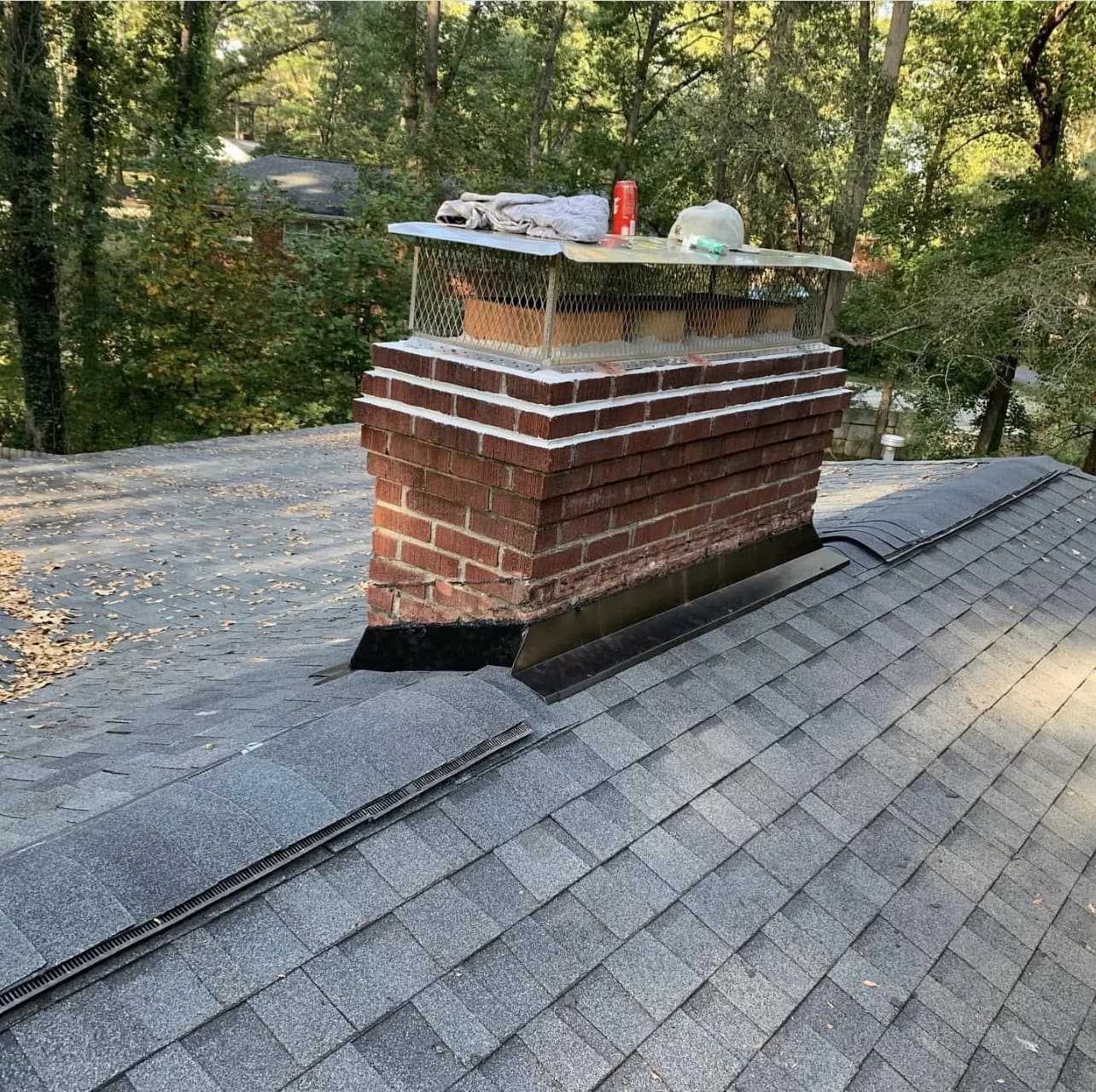
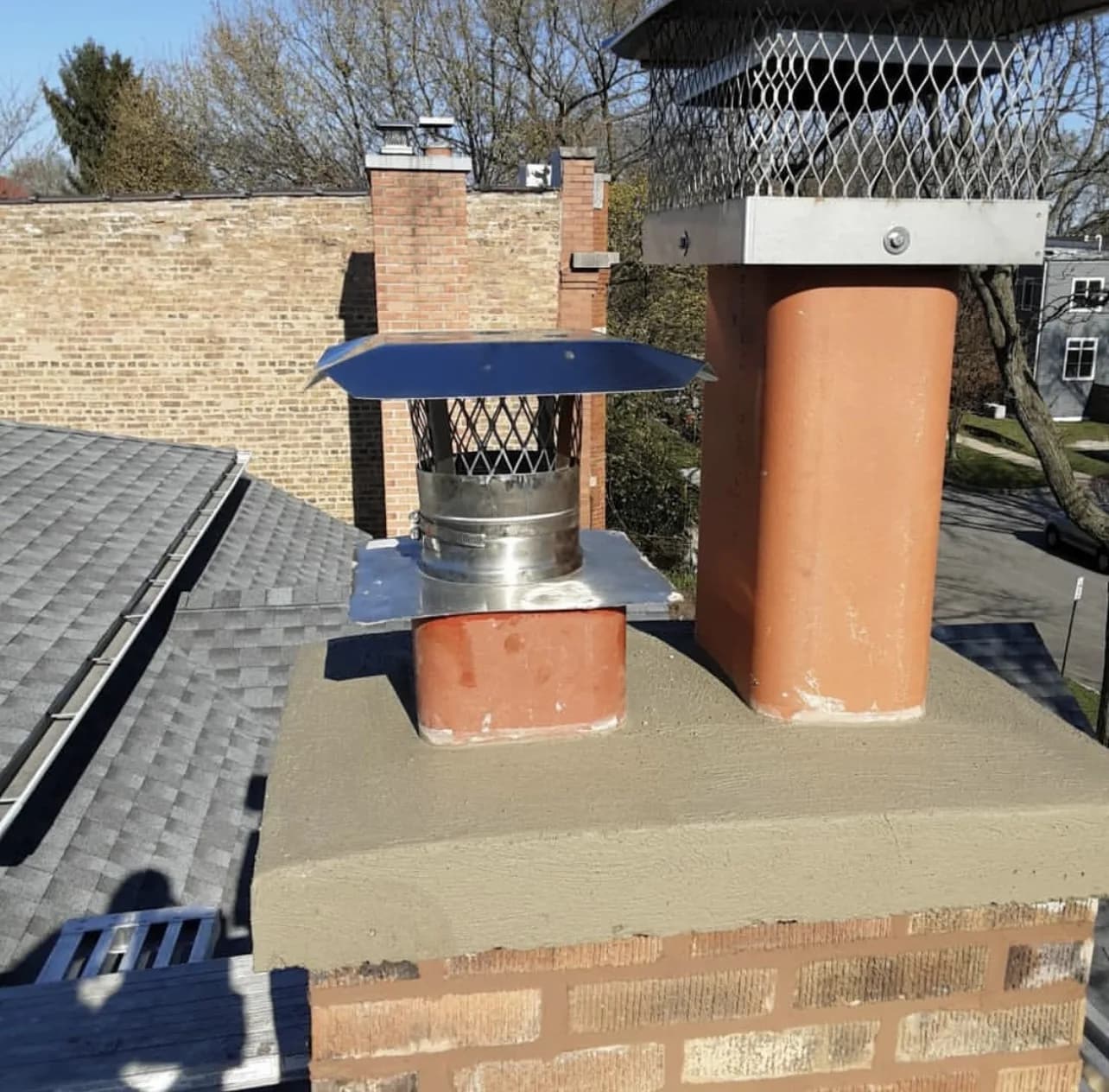
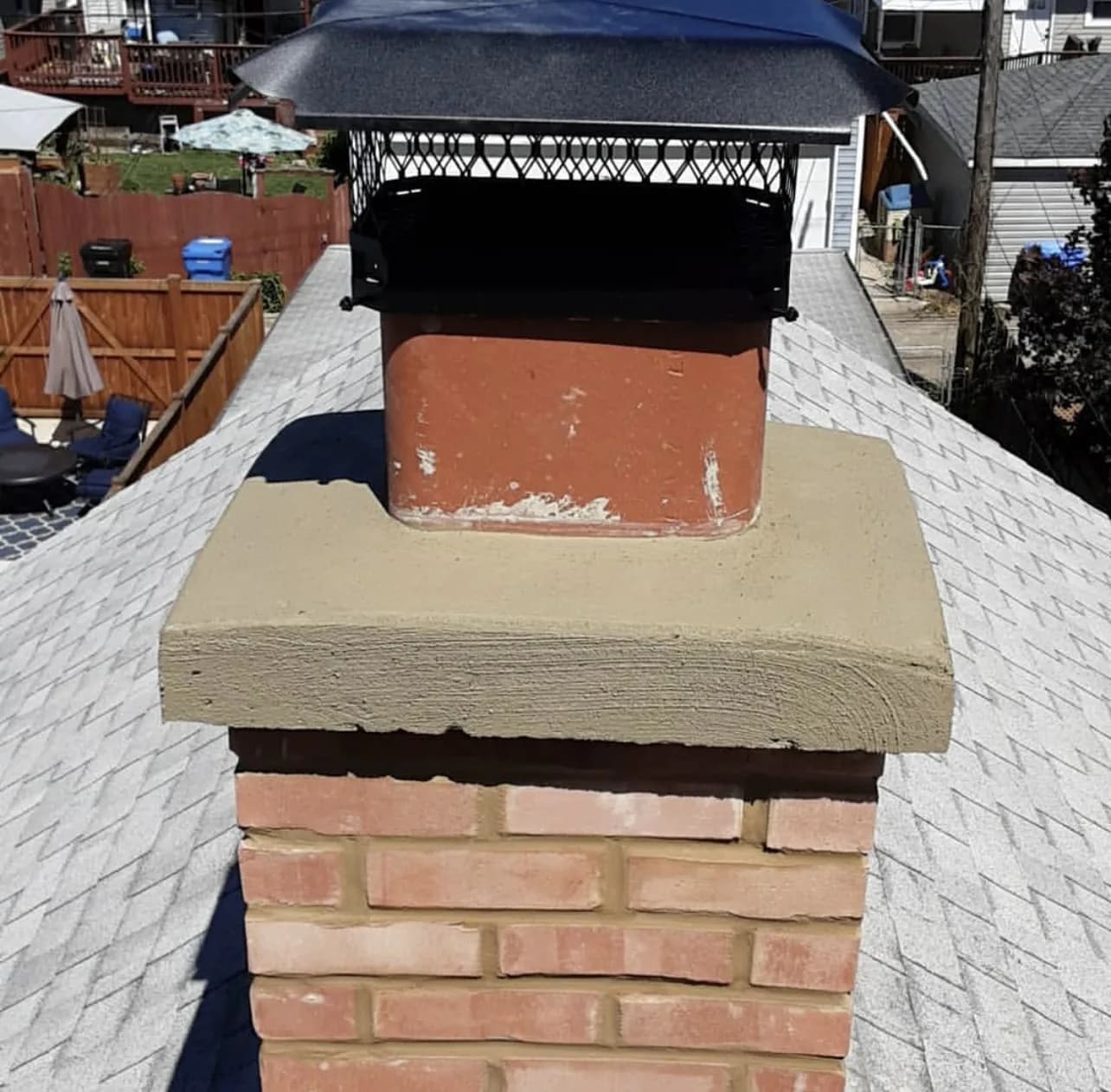
- A cracked or spalling crown, the concrete or mortar cap at the very top
- A missing, rusted, or damaged chimney cap
- White, chalky staining on the brick, known as efflorescence, which signals moisture moving through the masonry
- A chimney that appears to be leaning or separating from the house
- Gaps or crumbling mortar joints between bricks
Signs From Inside the Home
Some of the clearest warning signs show up inside the house, not on the chimney itself.
- A musty or damp smell near the fireplace, even when it is not in use
- Water stains on the wall or ceiling near where the chimney chase runs through the house
- A damper that sticks, will not open fully, or does not seal when closed
- Smoke backing up into the room instead of drawing up the flue
Need a Roof You Can Trust?
Free written estimates and 24-hour emergency service across New Jersey since 2015.
What Happens if Chimney Damage Is Ignored Through Winter
New Jersey’s freeze-thaw cycle turns a small crack into a bigger one over a single winter, as water gets into the masonry, freezes, and expands. Left long enough, that same cycle can let moisture reach the flue liner, turning a repair that would have cost a few hundred dollars in the fall into a full reline or partial rebuild by spring. A compromised flue also raises the risk of carbon monoxide entering the home rather than venting outside, which is a safety issue, not just a cost one.
Getting a Pre-Winter Chimney Inspection
The Chimney Safety Institute of America recommends an annual inspection for every chimney in use, and late summer or early fall is the ideal time to schedule it in New Jersey. Alpha Pro Construction provides free chimney inspections across Bridgewater and more than 130 New Jersey towns, and our chimney repair cost guide breaks down what different repairs typically run once you know what your chimney actually needs.
Signs Your Chimney Needs Repair Before Winter in New Jersey - FAQs
What Is the Most Common Sign a Chimney Needs Repair?
Efflorescence, the white chalky staining on brick, and crown cracks are among the most common visible signs, both pointing to water getting into the masonry. Either one is worth a professional inspection before winter.
Can I Use My Fireplace With a Cracked Chimney Crown?
It depends on severity, but a cracked crown lets water into the chimney structure with every rain or snow event, and that damage compounds over a winter. Getting it evaluated before regular use is the safer choice.
How Long Does Chimney Repair Take Before Winter?
A cap or crown repair can often be completed in a single day, while more involved work like tuckpointing or a partial rebuild can take several days depending on scope. Scheduling in late summer or early fall leaves enough time before the season starts.
Is Chimney Crown Repair the Same as Tuckpointing?
No. Crown repair addresses the concrete or mortar cap at the top of the chimney, while tuckpointing repairs the mortar joints between individual bricks lower on the structure. A chimney can need one, both, or neither depending on where the damage actually is.